
-
Address: Shahrah-e-Liaquat,
Serai Quarters 74000, Karachi -
Call Us: +92 319 3961178
Email Us: info@sshussain.com
Quick Answer
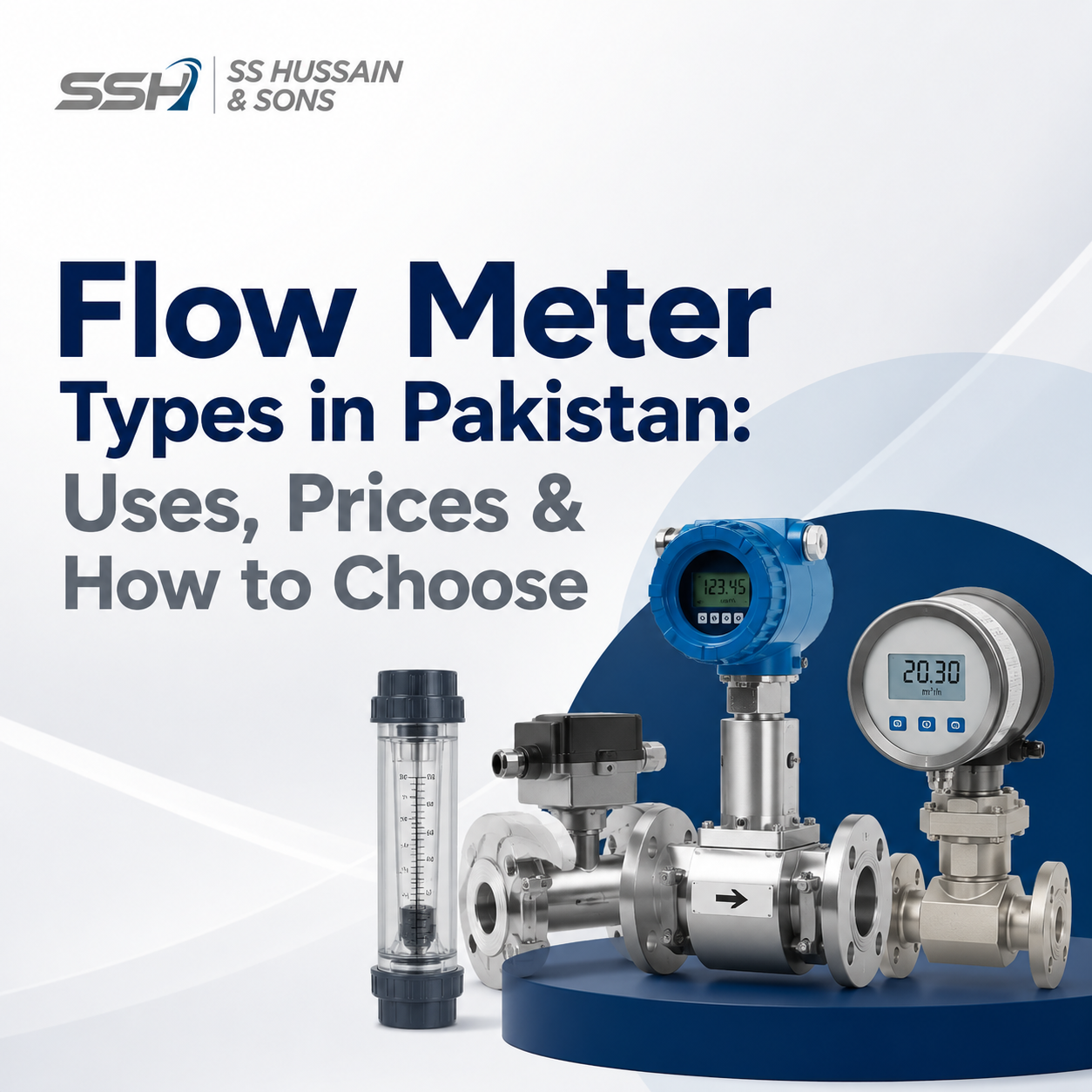
The main flow meter types are diesel meters, turbine meters, electromagnetic meters, oval gear meters, vortex meters, and ultrasonic meters. Each type is made for a different fluid and a different type of work. Diesel and oval gear meters are commonly used for fuel and oil, while electromagnetic and ultrasonic meters are used for water and clean liquids. Vortex meters can be used for gas and steam. The right flow meter depends on the fluid you are measuring, your pipe size, and whether you need a fixed or portable device.
What Does a Flow Meter Actually Do?
A flow meter measures how much liquid or gas passes through a pipe. The flow meter type you need depends on what you are measuring and where you will use it.
Water, diesel, oil, and steam all need different meters. That is why there are different types of flow meters, with each type made for a different job. If you are looking at types of flow meters, it helps to know which one is right for your fluid.
SS Hussain offers six main flow meter types: diesel meters, turbine meters, electromagnetic meters, oval gear meters, vortex meters, and ultrasonic meters. Let’s look at each type and see where it can be used.
Different Types of Flow Meters: Which One Fits Your Job?
Are You Measuring Diesel or Fuel?
For diesel or fuel, use a diesel flow meter. It is made to measure fuel flow.
You can choose a mechanical flow meter for diesel if you want a simple reading, or a digital flow meter for diesel if you want the reading on a screen.
Do You Need to Measure Flow Without Cutting Into the Pipe?
An ultrasonic flow meter is a good option when you don’t want to cut or open the pipe. A clamp-on, non-invasive ultrasonic flow meter is fitted outside the pipe and uses sound waves to measure the flow inside.
This means there is no need to drill into the pipe or stop the line for installation. It can be useful for pipelines carrying chemicals or high-pressure water.
Are You Working With Water or Another Clean, Conductive Liquid?
For water and other liquids that conduct electricity, an electromagnetic flow meter, also called a magnetic flow meter, can be a good choice.
An electromagnetic water flow meter is commonly used for water, wastewater, and other conductive liquids. It has no moving parts inside, so there are fewer parts that can break or need replacing.
Are You Working With Oil or a Thicker Fluid?
For oil, lubricants, and other thick liquids, an oval gear flow meter can be a good option. It measures the fluid by trapping small amounts and counting them as they pass through.
This also allows oval gear meters to give accurate readings at lower flow rates.
Are You Measuring Gas, Steam, or General Plant Flow?
A vortex flow meter can be used for gas, steam, and some liquid applications. It is also called a vortex shedding flow meter.
As the fluid passes the sensor, it creates small swirls. The meter measures these swirls to work out the flow rate.
Vortex flow meters can measure liquids, gases, and steam, and they have no moving parts, which means less mechanical wear.
Do You Want to See the Flow on a Screen?
A turbine flow meter measures the amount of liquid or gas passing through a pipe. Digital models show the flow reading on a screen, so you can see it easily.
A turbine flow meter can be used for both liquids and gases.
So in short, the right flow meter depends on what you are measuring. Use a diesel flow meter for fuel, an oval gear flow meter for oil, an electromagnetic or ultrasonic flow meter for water, and a vortex flow meter for gas or steam.
Ultrasonic Flow Meter Types: Which One Should You Pick?
Ultrasonic flow meters measure flow from outside the pipe using sound waves. Nothing needs to go inside the pipe, which makes them useful when you don’t want to cut or stop the pipeline.
The main types are based on how you plan to use the meter.
Handheld Ultrasonic Flow Meter
A handheld ultrasonic flow meter is useful for quick checks. You can take it from one pipe to another, check the flow, and move on.
Portable Ultrasonic Flow Meter
A portable ultrasonic flow meter is useful when you need to carry the meter between sites or take readings for a few hours or days.
Wall-Mounted Ultrasonic Flow Meter
A wall-mounted ultrasonic flow meter stays in one place after installation. It is a good choice when you need to check the flow regularly on the same pipe.
How Much Does a Flow Meter Cost in Pakistan?
We don’t list fixed flow meter prices in Pakistan on this page because prices can change over time.
For the latest price, you can contact us and ask for a current quote. You can also ask about the price of specific flow meter types, including diesel and ultrasonic flow meters.
What Should You Check Before You Order?
Before ordering a flow meter, there are three basic things you should know.
1. Your Fluid Type
Are you measuring diesel, water, oil, gas, or steam? Different fluids need different types of flow meters, so this is the first thing to check.
2. Your Pipe Size
Flow meters come in different sizes. Knowing your pipe diameter before you order will help you get the right meter.
3. Fixed or Portable
Think about where you will use the meter. Do you need it installed on one pipe all the time, or do you want to carry it between different pipes and sites?
If you’re not sure which flow meter you need, send SS Hussain your fluid type and pipe size. We can help you choose a suitable option based on your actual requirements.
FAQs
What’s the Difference Between Mechanical and Digital Flow Meters?
Mechanical flow meters give you a reading through a dial or counter. Digital flow meters show the reading on a screen and can make it easier to record and monitor flow.
How Do I Know What Size Flow Meter I Need?
The flow meter size usually depends on your pipe diameter and the flow rate you need to measure. Share your pipe size and flow details with your supplier so they can confirm the right size.
How Do I Read a Flow Meter?
Most digital flow meters show the flow rate directly on the screen. Mechanical flow meters usually use a dial or counter to show how much fluid has passed through.
Can One Flow Meter Measure More Than One Type of Fluid?
Some can. Vortex flow meters, for example, can be used for liquids, gases, and steam. Other flow meter types are better suited to certain fluids, such as water, diesel, or oil.
Do Ultrasonic Flow Meters Work on All Pipes?
Ultrasonic flow meters work with many common pipe materials, but the pipe material, wall thickness, and condition can affect the reading. It’s best to check these details with your supplier before ordering.