
Showing 1–16 of 103 results
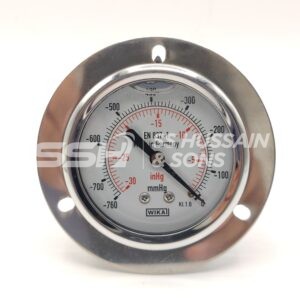
2.5 INCH BACK CONNECTION General Purpose Pressure Gauge –WIKA
Read More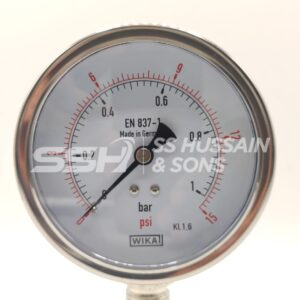
2.5 INCH Bottom CONNECTION General Purpose Pressure Gauge –WIKA
Read More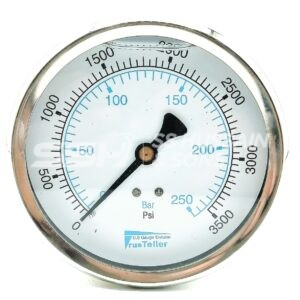
4 INCH BACK CONNECTION LIQUID FILLED GENERAL PURPOSE PRESSURE GAUGE – TRUETELLER
Read More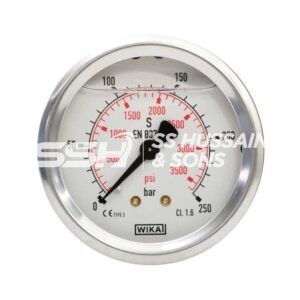
4 INCH BACK SS BRASS CONNECTION General Purpose Pressure Gauge – WIKA
Read More
4 INCH Bottom CONNECTION General Purpose Pressure Gauge – WIKA
Read More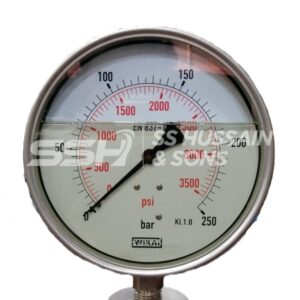
6 INCH Bottom CONNECTION General Purpose Pressure Gauge – WIKA
Read More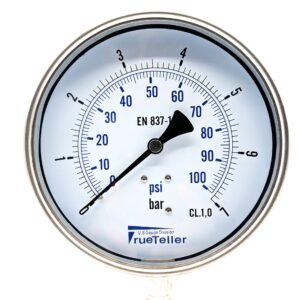
6 INCH Bottom Connection LIQUID FILLED GENERAL PURPOSE PRESSURE GAUGE – TRUETELLER
Read More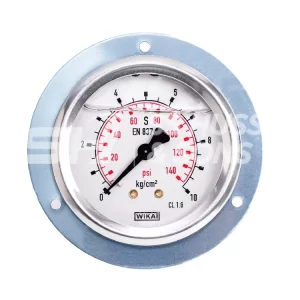
ALL S.S 2.5 INCH BACK CONNECTION Pressure Gauge – WIKA
Read More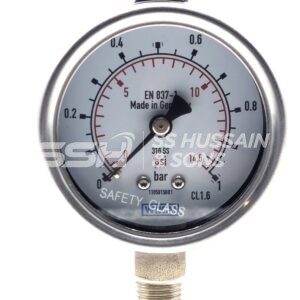
ALL S.S 2.5 INCH Bottom CONNECTION Pressure Gauge – WIKA
Read More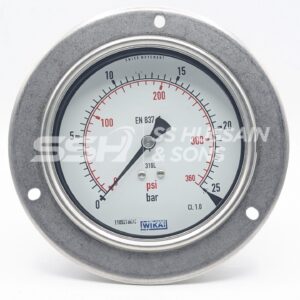
ALL S.S 4 INCH BACK CONNECTION Pressure Gauge – WIKA
Read More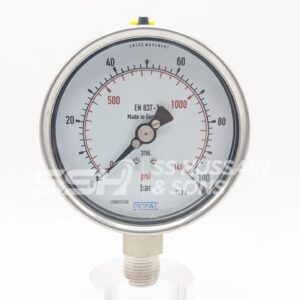
ALL S.S 4 INCH BOTTOM CONNECTION Pressure Gauge – WIKA
Read More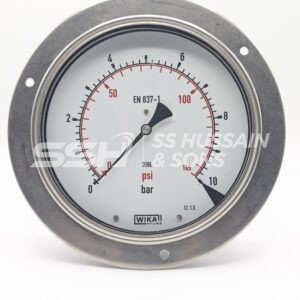
ALL S.S 6 INCH BACK CONNECTION Pressure Gauge – WIKA
Read More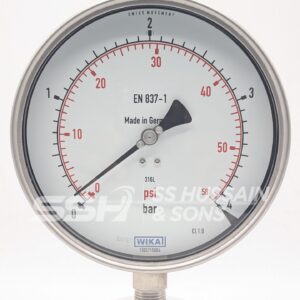
ALL S.S 6 INCH BOTTOM CONNECTION Pressure Gauge – WIKA
Read More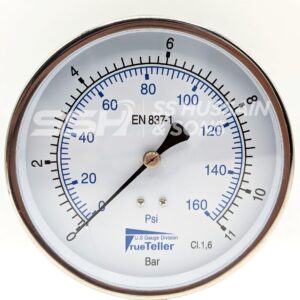
Contractor Pressure Gauge – TRUE TELLER
Read More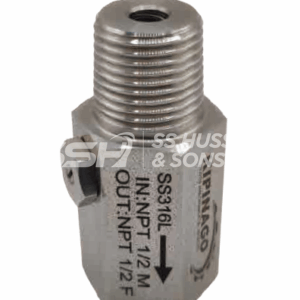
Snubber for Pressure Gauges -KPG-0052
Read More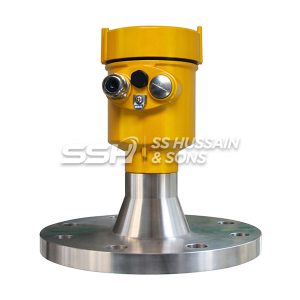
26G High Frequency Radar Level Meter
Read MoreIndustrial Measuring & Controlling Instruments in Pakistan
Most instrument failures don’t announce themselves. A gauge reads a little high for months before anyone notices the accuracy has drifted outside spec. A transmitter starts sending a slightly stale signal to the DCS. A tank level sensor gives one false alarm too many, and the operator on shift starts ignoring it — right before the one alarm that mattered. In a refinery, a pharma plant, or a food line, that’s how a “minor” instrument problem turns into a shutdown, a failed audit, or worse.
We’ve spent the last 25 years supplying pressure, temperature, flow, and level instruments to process industries across Pakistan — from our base in Karachi to plants in Lahore, Faisalabad, and beyond. This page is the full range we carry: genuine WIKA, Ashcroft, Kipinago, True Teller, and Marshall Town instruments, chosen and stocked because they hold up under Pakistani plant conditions — heat, dust, voltage spikes, and maintenance schedules that don’t always match the manual.
How to Choose the Right Instrument (Before You Buy)
Every instrument enquiry we get boils down to a handful of decisions. Get these right and the rest — brand, price, delivery — falls into place quickly.
- Local reading or remote signal? If someone just needs to glance at a dial on the pipe, a gauge or dial thermometer does the job. If the reading has to reach a PLC, DCS, or SCADA system, you need a transmitter — most process transmitters we supply give a standard 4–20mA output that any control system can read.
- What’s touching the instrument? Clean water and air are forgiving. Corrosive chemicals, slurries, or anything that crystallises will damage a standard gauge fast — that’s when a diaphragm seal or a chemical-resistant wetted material earns its cost.
- What’s the environment doing to it? Vibration near a pump calls for a glycerine-filled gauge. High ambient heat calls for a remote-mount or capillary configuration. Outdoor or washdown areas need a proper IP rating.
- How much accuracy do you actually need? A ±2.5% accuracy gauge is fine for a utility line; a pharmaceutical or custody-transfer application often needs ±1% or better. Paying for accuracy you don’t need is as wasteful as skimping on accuracy you do need.
- Do you need paperwork with it? If your facility is audited — food safety, pharma GMP, ISO — you need genuine instruments with manufacturer documentation and an ISO-traceable calibration certificate, not a grey-market unit with no paper trail.
Pressure Gauge vs Pressure Transmitter vs Pressure Switch
The most common question we field on the phone. Here’s the short version:
| Instrument | What It Gives You | Typical Output | Best For |
| Pressure Gauge | A local, visual reading — analog dial or digital display | None (visual only) | Quick on-site checks, panel mounting, low-cost monitoring |
| Pressure Transmitter | A continuous electrical signal proportional to pressure | 4–20mA (standard) | Feeding data into a PLC, DCS or SCADA system |
| Pressure Switch | An automatic on/off action at a pre-set pressure point | Relay/contact signal | Triggering alarms, shutting down pumps, starting backups |
Pressure Measuring Instruments
Pressure is usually the first thing to go wrong in a process, and the last thing anyone wants to find out about after the fact. We stock instruments for everything from a straightforward compressed-air line to high-temperature, corrosive-media applications where the wrong material choice means a replacement gauge every few months.
Pressure Gauges
Bourdon tube analog gauges remain the workhorse of Pakistani plants, and for good reason — no power required, easy to read, and forgiving of rough handling. We carry them in brass and stainless steel, dry and glycerine-filled, alongside digital models where a numeric readout matters more than tradition. Ashcroft gauges are a common choice where budget and durability both matter; WIKA gauges tend to be the specification of choice on projects with tighter accuracy requirements or international EPC standards attached.
Pressure Transmitters
When pressure data needs to travel — into a control room, a data logger, or a remote monitoring dashboard — a transmitter replaces the dial with a signal. Our range covers standard 4–20mA transmitters that integrate into practically any existing control system without custom wiring or protocol headaches.
Pressure Switches
A switch doesn’t display anything; it acts. Set it at a pressure point and it trips a relay — shutting a valve, sounding an alarm, kicking a standby pump into service. We supply switches rated for liquid, gas, and steam service, which matters more than it sounds: a switch rated only for liquids will fail early in a steam line.
Diaphragm Seals
If your media is thick, hot, corrosive, or prone to clogging the sensing port, a bare gauge will fail early no matter how good the brand. A diaphragm seal sits between the process and the instrument, isolating the sensitive internals while still transmitting an accurate pressure signal. We supply both direct-mount and capillary configurations from WIKA and Ashcroft, sized to the vessel and media in question rather than sold as a one-size-fits-all part.
Temperature Measuring Instruments
Temperature is rarely just a comfort metric in industrial settings — it’s a quality and safety control point. A pharmaceutical cold chain that drifts a few degrees can void a batch. A chemical reactor running hot can turn a controlled reaction into an uncontrolled one. Our temperature range is built for the process floor, not the lab bench.
Dial Thermometers
Bimetallic dial thermometers give an instant, no-power-required readout for tanks, pipelines, and vessels. Available in various stem lengths and thermowell-compatible process connections, they’re usually the first instrument we recommend when someone just needs a reliable at-a-glance check.
Thermometers with Switch Contacts
These combine the visual dial with a built-in switch that fires when temperature crosses a set threshold — triggering an alarm, cutting power to a heater, or starting a cooling circuit automatically. Common in chemical processing and hot utility systems where you can’t rely on someone walking past and checking a dial at the right moment.
Flow Measuring Instruments
If you’re estimating flow rather than measuring it, you’re either overpaying for lost product or under-billing for what you deliver — both cost money. These four technologies cover the overwhelming majority of flow applications we see in Pakistan.
| Technology | Best For | Key Advantage | Watch Out For |
| Ultrasonic Flow Meter | Clean liquids, water, HVAC circuits | Non-invasive, no moving parts, no line cut required | Needs a straight, full pipe run for accuracy |
| Oval Gear Flow Meter | Oils, chemicals, fuels (viscous fluids) | High accuracy via positive displacement | Moving parts wear over time; needs clean media |
| Vortex Flow Meter | Steam, gas, and general liquid service | Robust, low-maintenance, wide range | Less accurate at very low flow rates |
| Diesel Flow Meter | Generator fuel monitoring, fuel depots | Purpose-built accuracy for fuel billing/tracking | Needs periodic verification for fiscal use |
Level Measuring Instruments
Whether it’s inventory in a storage tank or the level of a hazardous liquid in a process vessel, getting this wrong tends to be expensive, messy, or both. Technology choice here depends heavily on the media and the vessel — there’s no single “best” level sensor, only the right one for the application.
- Guided Wave Radar: Highly reliable even with turbulence, foam, or low-dielectric liquids; suited to tall, high-pressure vessels.
- High Frequency Radar (Non-Contact): Measures from above without touching the media — a good fit for solids, powders, and hygiene-sensitive processes.
- Ultrasonic Level Meters: A cost-effective non-contact option for open channels and standard tanks holding water or non-aggressive liquids.
- ATWLM Water Level Meters: Purpose-built for boreholes, groundwater wells, and reservoirs — common on water-sector projects.
- Tuning Fork Level Switches: Simple point-level detection for high/low alarms; no moving parts means almost no maintenance.
Brand Comparison: Which Instrument Brand Should You Choose?
Brand matters more in this category than most, because the real cost of an instrument isn’t the purchase price — it’s what happens if it fails mid-shift. Here’s how the brands we carry actually differ in practice.
| Brand | Origin / Heritage | Best Known For | Typically Chosen When |
| WIKA | Germany, global standard since 1946 | Precision pressure & temperature instruments used in 100+ countries | Project specs demand tight accuracy or international EPC compliance |
| Ashcroft | USA, 165+ years in pressure measurement | Rugged, field-proven gauges and switches | Budget-conscious projects that still can’t compromise on reliability |
| Kipinago / True Teller | In-house brands stocked in Pakistan | Consistent industrial-grade accuracy at accessible pricing | General manufacturing and utility applications, cost-sensitive buys |
| Marshall Town | Established industrial measurement brand | Robustness and value for routine monitoring | Standard applications where premium accuracy isn’t required |
Why Pakistani Engineers Buy from SS Hussain & Sons
- 25+ years in Pakistani industrial conditions. We’ve seen what heat, humidity, dust, and power fluctuations actually do to instruments over time — not just what a datasheet promises.
- Technical guidance before you order. Our team walks through technology, range, process connection, and material with you, so you order the right instrument once instead of returning the wrong one twice.
- In-house calibration and field support. Beyond the sale, we calibrate, service, and consult on installations — so instruments keep performing to spec, not just on day one.
- Genuine stock, every time. Every instrument ships with proper manufacturer documentation for QA traceability, safety audits, and certification requirements — not grey-market substitutes.
- Nationwide supply from Karachi. Based at Shahrah-e-Liaquat, Serai Quarters, with the logistics to serve clients across Pakistan reliably.
Frequently Asked Questions
What industrial measuring devices does SS Hussain carry?
SS Hussain carries in stock pressure gauges, pressure transmitters, pressure switches, diaphragm seals, thermometers, flow meters, and level devices suitable for industry.
What brands of pressure gauges are supplied by SS Hussain?
We supply brands such as WIKA, Ashcroft, Kipinago, True Teller, Marshall Town, subject to availability of models.
Are WIKA and Ashcroft available in Pakistan?
Yes. SS Hussain supplies original WIKA and Ashcroft in Karachi, Pakistan in stock and on order basis.
What is the distinction between a pressure gauge and a pressure transmitter?
A pressure gauge gives local reading of pressure, while a pressure transmitter sends pressure in the form of electrical signal mainly 4-20 mA, to a distant location.
When to use diaphragm seal with pressure instrument?
A diaphragm seal is used in case of corrosive, viscous, hot media in process and in cases where the sensing connection may get blocked.
How frequently should industrial pressure gauges be calibrated?
Frequency of calibration will depend on the application and operational environment and it varies from 6 months-12 months in cases of critical gauges.
