
Showing all 13 results
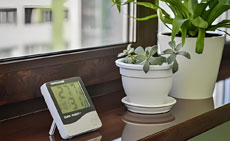
Hygrometers (8)
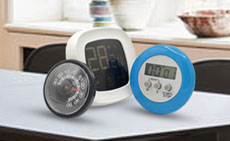
Temperature Measuring Devices (4)
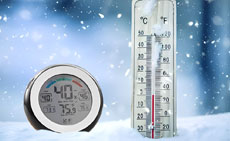
Thermometers (4)
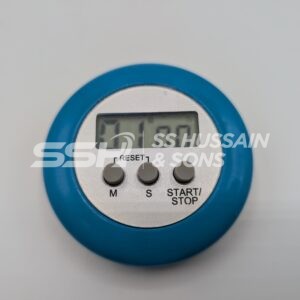
DIGITAL TIMER JS-131
Read More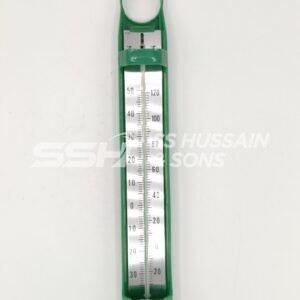
Air Temperature And Dipping Thermometer
Read More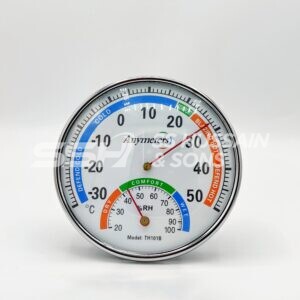
Analog Thermometer/Hygrometer
Read More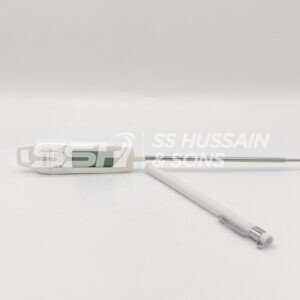
Digital Food Thermometer TP400
Read More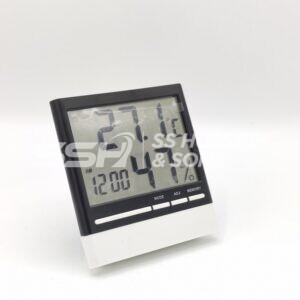
Digital Hygrometer CX-318
Read More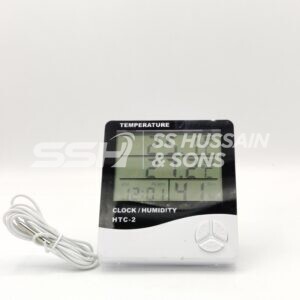
Digital Temperature Humidity Meter HTC-2
Read More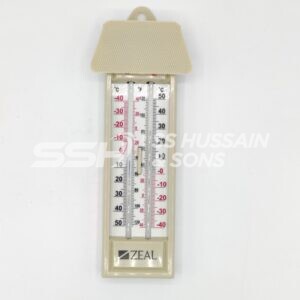
Minimum & Maximum Thermometer Zeal
Read More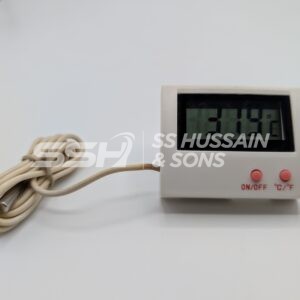
Room Temperature Meter T-500
Read More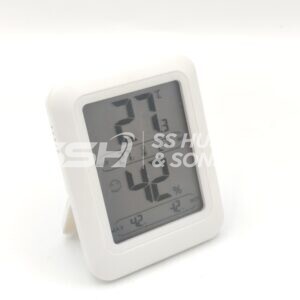
Temperature Humidity Meter PT19DE
Read More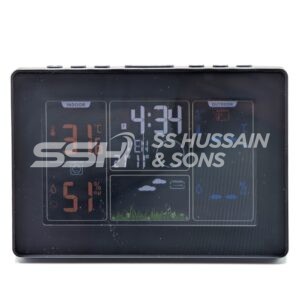
Weather Station PT201 Series
Read More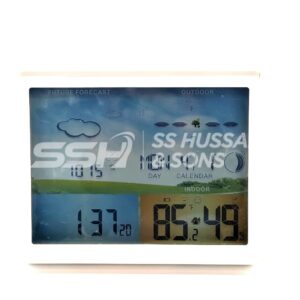
Weather Station PT20A
Read More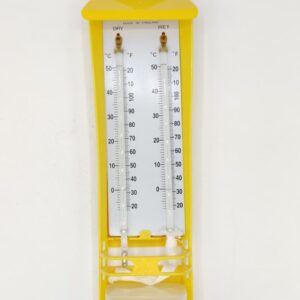
Wet and Dry Bulb Hygrometer Zeal
Read More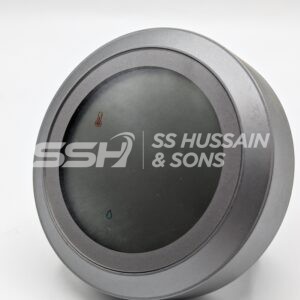
WiFi Thermometer Hygrometer PT19DW
Read MoreThermometers, Hygrometers & Weather Stations in Pakistan
Most people only think about humidity when it’s already caused a problem — medicine that’s gone slightly soft, a store room that smells faintly of damp, a musical instrument that won’t stay in tune. A five-hundred-rupee hygrometer would have flagged it weeks earlier. That’s really what this category is about: small, affordable instruments that turn a guess into a number, before the guess costs you something.
We stock digital and analog thermometers, hygrometers, and weather stations for homes, offices, pharmacies, warehouses, and labs across Pakistan. Unlike a pure electronics retailer, these instruments come out of the same supply chain we use for our industrial calibration work — so even the smallest desktop hygrometer here has been chosen with the same accuracy standards we’d apply to a plant instrument, just at a price point that makes sense for everyday use.
Which Instrument Do You Actually Need?
Skip the spec sheet for a moment. Most buyers already know their situation — they just haven’t matched it to the right device yet.
| Your Situation | Recommended Instrument | Why |
| Everyday home comfort check | Analog thermometer/hygrometer combo | No batteries, no app, glance-and-go reliability for years |
| Office or warehouse humidity control | Digital hygrometer with min/max memory | Fast digital readout, tracks daily swings automatically |
| Kitchen or food-service spot checks | Digital food thermometer (probe) | Fast, accurate readings for hygiene and food-safety checks |
| Pharmacy fridge, incubator, or enclosed space | Mini LCD thermometer/hygrometer with remote probe | Panel-mountable display with a cable sensor for sealed units |
| Warehouse, archive, or server room | WiFi thermometer/hygrometer | Remote monitoring and alerts without a physical walk-through |
| Outdoor, rooftop, or agricultural monitoring | Weather station | Multi-parameter tracking with an outdoor-rated sensor |
Digital vs Analog — Which Is Actually More Accurate?
This comes up in almost every conversation we have with a first-time buyer, and the honest answer is: it depends what you’re optimising for.
| Factor | Digital | Analog |
| Reading speed | Near-instant | Slower, needs a moment to settle |
| Precision | Higher — often to 0.1°C / 1% RH | Lower — typically ±1–2°C, coarser humidity scale |
| Power needs | Requires a battery | None — fully mechanical |
| Extra features | Min/max memory, alarms, WiFi (on some models) | None — display only |
| Longevity | Battery and sensor drift over years | Very long-lasting if kept dry and undamaged |
| Best for | Anyone tracking trends or needing precision | Simple, low-maintenance monitoring |
If you just need to know “is it roughly comfortable in here,” analog is genuinely fine and will outlast several digital units. If you’re tracking humidity trends in a medicine store or need documented readings, digital wins — but only if you also check its calibration occasionally, which digital sensors do drift on over a couple of years.
What’s in the Range
Thermometers
From simple glass and bimetal dial thermometers to fast digital probe models for food and lab use. Digital probe thermometers are the better choice whenever you need a precise, repeatable spot reading — a walk-in fridge, a cooking process, a lab sample — while dial and glass thermometers remain a solid, low-cost option for continuous ambient monitoring where speed doesn’t matter.
Hygrometers
Our hygrometer range runs from classic wet-and-dry bulb models — still genuinely accurate and popular where a reliable, non-electronic reading is preferred — through to digital indoor/outdoor units and WiFi-connected models that let you check humidity levels from your phone without walking into the room.
Weather Stations
For anyone tracking more than just one room — a rooftop, a small farm plot, or a facility’s outdoor conditions — our weather stations combine temperature, humidity, and often additional environmental data in a single indoor display paired with an outdoor sensor unit.
Instrument Comparison at a Glance
| Instrument | Typical Range | Typical Accuracy | Best For |
| Digital Food/Probe Thermometer | -50°C to +300°C | ±0.5–1°C | Kitchens, labs, quick spot checks |
| Glass/Dial Thermometer | -30°C to +300°C | ±1–2°C | Low-cost, continuous ambient reading |
| Digital Indoor/Outdoor Hygrometer | 10–99% RH, -50°C to +70°C | ±3% RH / ±1°C | Homes, offices, general storage |
| Wet & Dry Bulb Hygrometer | 10–100% RH | ±5% RH | Labs, classic reliable readings without batteries |
| WiFi Thermometer/Hygrometer | 10–99% RH, -20°C to +60°C | ±3% RH / ±0.5°C | Remote monitoring for warehouses, archives |
| Weather Station | Varies by sensor package | Model-dependent | Outdoor, rooftop, agricultural monitoring |
A Quick Word on Ideal Humidity Levels
It’s one of the most common questions we get, so it’s worth answering plainly: most homes and offices are comfortable somewhere between 40–60% relative humidity. Pharmaceutical and sensitive storage often needs to stay tighter — commonly below 50–55% RH, depending on what’s stored — which is exactly why a documented digital reading matters more in that setting than a rough analog glance.
Why Buy from SS Hussain & Sons
- Genuine, checked stock. The same sourcing standards we apply to industrial instruments carry over to this range — not unverified marketplace imports.
- Guidance matched to your actual use case. We’ll ask what you’re monitoring and where, not just sell you the highest-margin unit.
- 25+ years of instrument expertise behind a small purchase. The same team that calibrates industrial pressure gauges stands behind these desktop instruments.
- Nationwide delivery from Karachi. Serving homes, offices, and businesses across Pakistan, not just walk-in customers.
Frequently Asked Questions
What is the difference between a thermometer and a hygrometer?
A thermometer measures temperature; a hygrometer measures relative humidity. Many modern digital units combine both functions in a single display, which is convenient for general monitoring in homes, offices, and storage areas.
Which is more accurate — a digital or analog thermometer?
Digital thermometers are generally faster and more precise, often accurate to within half a degree, making them well suited to food safety and lab use. Analog thermometers are slower to settle but require no batteries and hold their accuracy well over long periods if undamaged.
What is a good indoor humidity level to maintain?
Most homes and offices are comfortable between 40% and 60% relative humidity. Sensitive storage — medicines, electronics, some foods — often needs to stay lower, commonly under 50–55% RH, which is worth checking against the specific product’s storage guidance.
How do I know if my hygrometer is reading accurately?
A simple check is the salt test: seal the hygrometer in an airtight bag with a small dish of damp table salt for 8–12 hours. A properly calibrated hygrometer should read close to 75% RH under those conditions; a significant deviation suggests it needs recalibration or replacement.
What is a weather station used for?
A weather station tracks environmental conditions — typically temperature and humidity, sometimes wind, rainfall, or pressure — using an outdoor sensor paired with an indoor display, useful for homes, small farms, and facilities monitoring outdoor conditions.
Can I monitor temperature and humidity remotely?
Yes — our WiFi-enabled thermometer/hygrometer models allow remote monitoring from a phone, which is particularly useful for warehouses, archives, or storage areas that aren’t checked in person every day.
Where can I buy thermometers, hygrometers, and weather stations in Pakistan?
SS Hussain & Sons supplies this full range with nationwide delivery across Pakistan from our Karachi base, alongside guidance on which instrument actually fits your situation.
