
-
Address: Shahrah-e-Liaquat,
Serai Quarters 74000, Karachi -
Call Us: +92 319 3961178
Email Us: info@sshussain.com
Quick Answer
A hygienic pressure gauge for a dairy or juice plant needs a welded 316L stainless steel diaphragm, a tri-clamp connection on the product side, and no threads touching the product. Look for 3-A Sanitary Standard or ASME BPE compliance. A regular stainless steel gauge without these features does not meet hygienic requirements, even if it looks similar.
Introduction
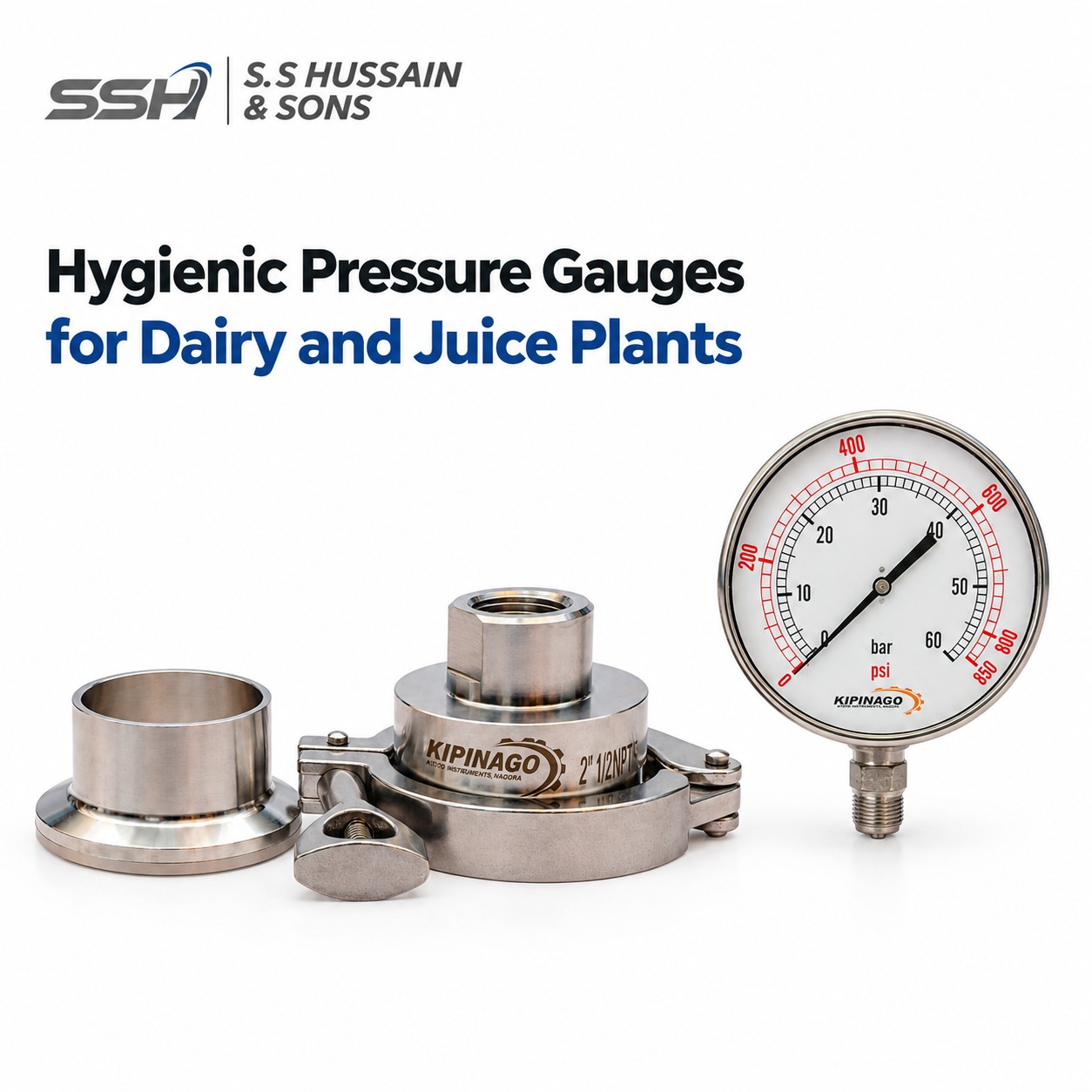
A hygienic pressure gauge is usually two parts working together: a standard pressure gauge, and a hygienic diaphragm seal that isolates it from the product. The diaphragm seal is what actually needs to be welded, tri-clamp, and certified, the gauge on the other side of it can be a standard instrument.
Dairy and juice plants can’t use a standard pressure gauge, even a stainless steel one. This guide explains exactly what makes a gauge hygienic, and what to check before you buy.
What Makes a Pressure Gauge Hygienic
A hygienic pressure gauge has a welded diaphragm, a tri-clamp connection on the product side, and a smooth interior finish. These three features are what separate it from a standard gauge.
The gauge itself can still attach to the seal using a normal threaded connection, such as 1/2″ NPT. This is fine, because that side never touches the product. The no-threads rule applies only to the side that contacts the milk, juice, or other process fluid.
Why Threads Aren’t Allowed on the Product Side
Threaded connections can’t be fully cleaned, so bacteria can collect inside them. This is the real reason sanitary gauges use tri-clamp connections instead.
A tri-clamp connection opens with no tools, exposing a flat, smooth surface with no gaps for residue to hide in. This makes it possible to clean or replace the seal quickly between production runs.
What to Confirm Before You Buy
Confirm three things: the diaphragm is welded, the product-side connection is tri-clamp, and the certification is documented. Don’t assume “stainless steel” alone means the gauge is hygienic-rated.
A gauge can be made entirely of stainless steel and still have a threaded product connection, which would fail hygienic requirements. Ask for the certification paperwork directly rather than relying on the material description alone.
Bottom Line
A hygienic pressure gauge needs a welded diaphragm, a tri-clamp connection on the product side, and documented 3-A or ASME BPE certification. Threads are fine on the instrument side, but never on the side touching your product. Confirm these three details before you buy. Stainless steel alone doesn’t guarantee a gauge is hygienic-rated.
How SS Hussain & Sons Can Help
We supply both halves of a hygienic pressure gauge setup, pressure gauges and sterile-connection diaphragm seals built for food, beverage, and pharmaceutical lines. The diaphragm seal has a 1½” clamp connection on the product side, keeping the assembly fully hygienic and easy to open for cleaning, with no residue left behind. It’s SIP and CIP compatible, 3-A compliant, and meets ASME BPE. Tell us your pressure range and instrument type, and we’ll help you match the right gauge-and-seal combination for your line. Get a Quote
FAQs
What’s the difference between a regular stainless gauge and a hygienic gauge?
A hygienic gauge has a welded diaphragm and a tri-clamp connection on the product side. A regular stainless gauge may still use threaded connections, which don’t meet sanitary requirements.
Can a hygienic pressure gauge have a threaded connection anywhere?
Yes, on the instrument side where the gauge attaches to the seal. Threads are only a problem on the side that touches the product.
What is 3-A Sanitary Standard certification?
It’s a certification confirming a gauge’s material, design, and cleanability meet requirements set for dairy and food processing equipment.
Is the gauge suitable for SIP and CIP cleaning?
Yes, if it’s a genuine hygienic model. Look for SIP and CIP compatibility listed in the specifications before buying.