Quick Answer If your level or flow instrument gives a wrong reading, sets off a false alarm, or looks damaged, check it. This does not always mean it is broken. Tannery wastewater has chromium, sulfide, chloride, and fat in it. This mix rusts metal parts and coats the sensor faster than normal wastewater does. Check

-
Address: Shahrah-e-Liaquat,
Serai Quarters 74000, Karachi -
Call Us: +92 319 3961178
Email Us: info@sshussain.com

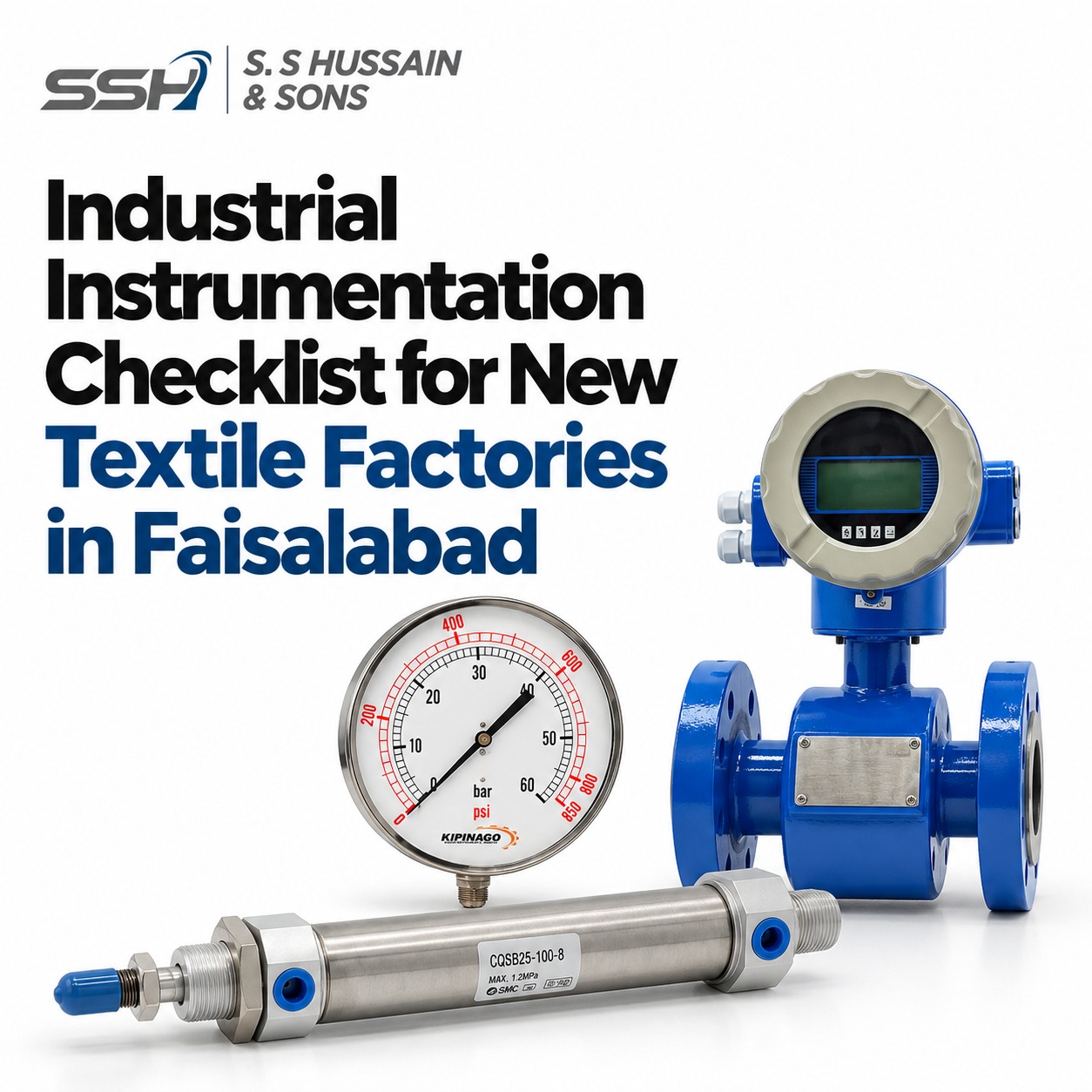
Industrial Instrumentation Checklist for New Textile Factories in Faisalabad
Quick Answer Faisalabad handles the full textile value chain in one city, from ginning and spinning to weaving, dyeing, and finishing. That means a new mill here needs all six instrument categories working together from day one: pressure, temperature, humidity, flow, level, and pneumatic air systems. Cotton dust is a bigger day to day

sshussainadmin
sshussainadmin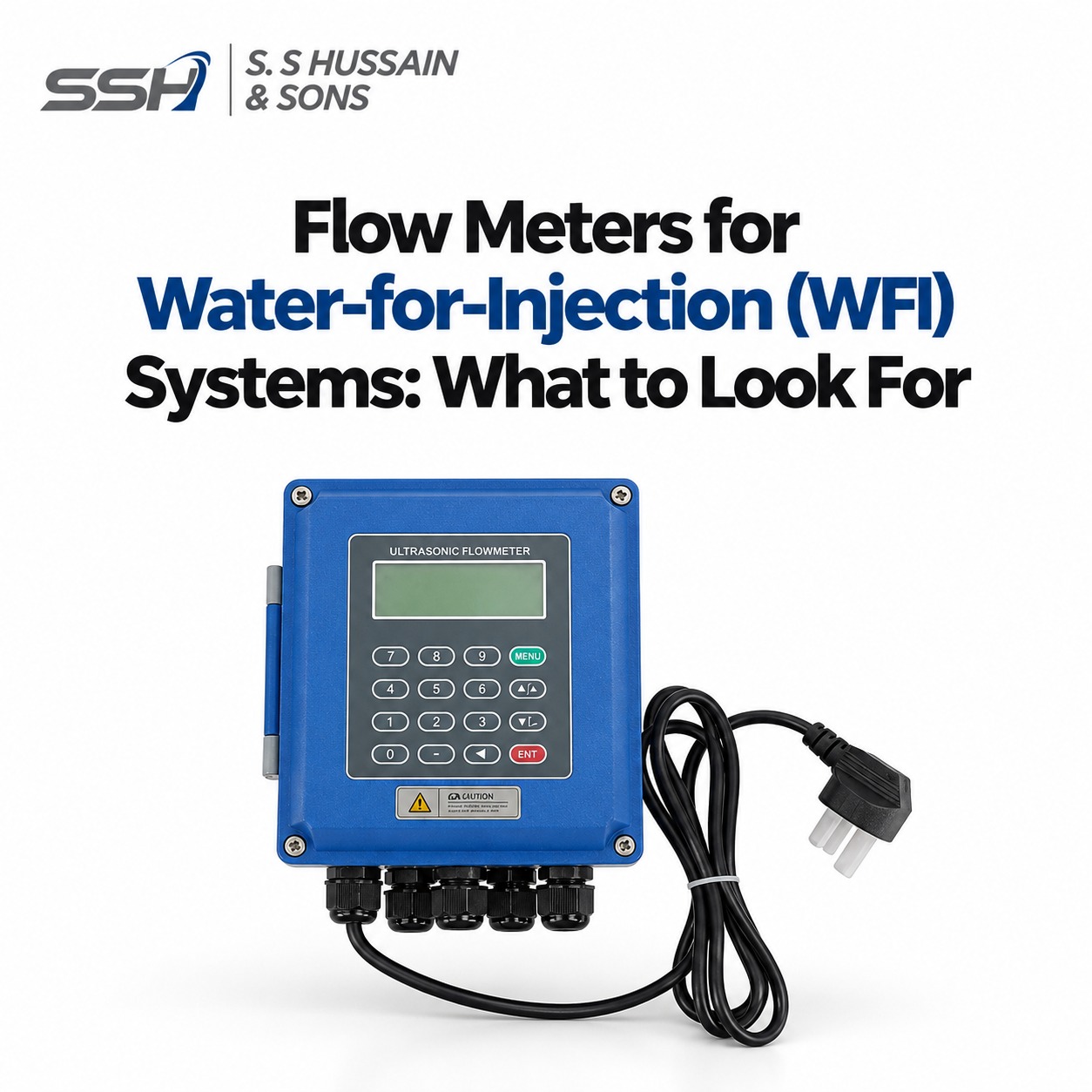
Flow Meters for Water-for-Injection (WFI) Systems: What to Look For
Quick Answer A flow meter for a Water-for-Injection (WFI) system must work on very low-conductivity water and survive continuous, hot loop circulation. The best option never touches the fluid at all. Clamp-on ultrasonic meters meet all three requirements. Oval gear meters, diesel-style meters, and standard vortex meters do not, and should be avoided.
sshussainadmin
sshussainadmin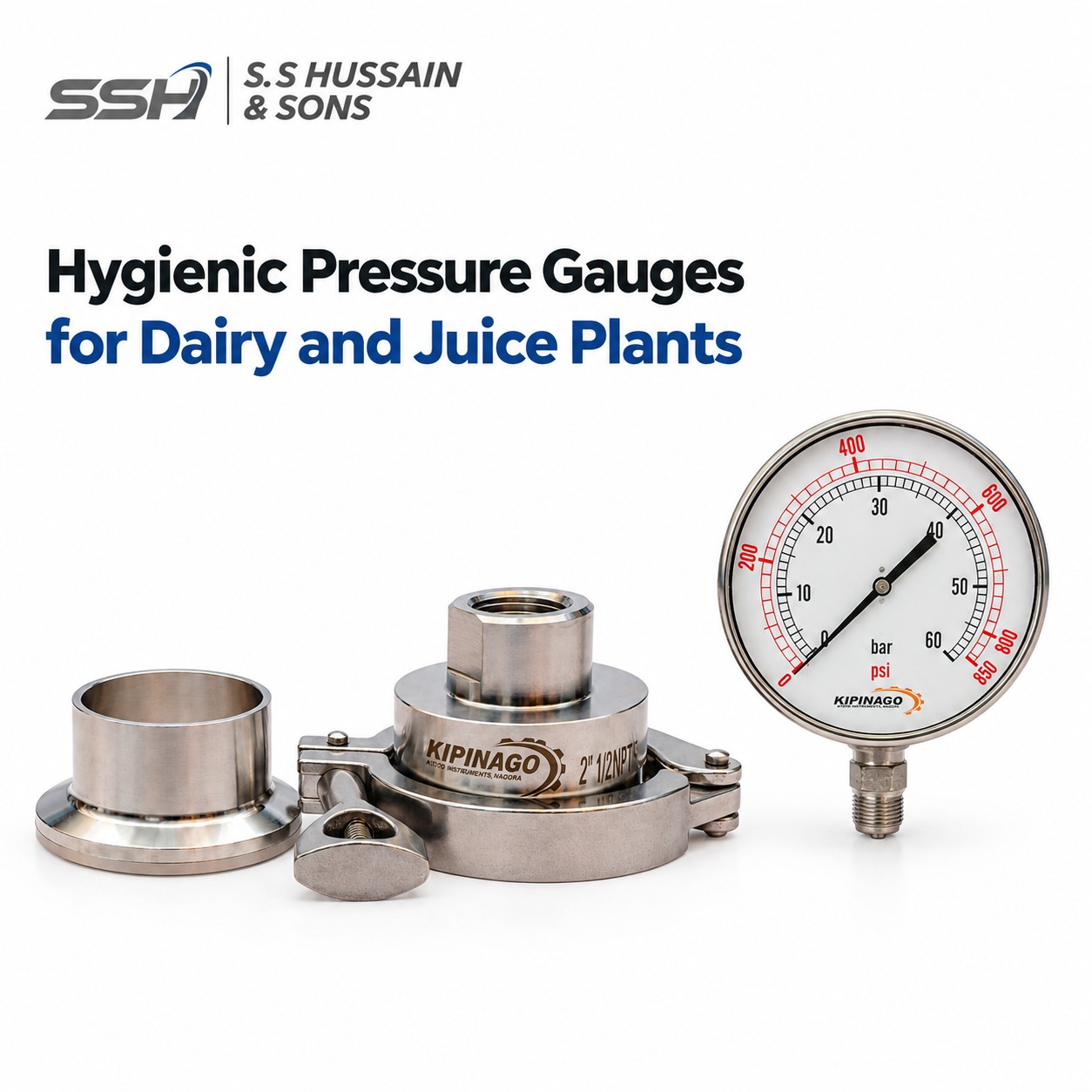
Hygienic Pressure Gauges for Dairy and Juice Plants
Quick Answer A hygienic pressure gauge for a dairy or juice plant needs a welded 316L stainless steel diaphragm, a tri-clamp connection on the product side, and no threads touching the product. Look for 3-A Sanitary Standard or ASME BPE compliance. A regular stainless steel gauge without these features does not meet hygienic requirements,
sshussainadmin
sshussainadmin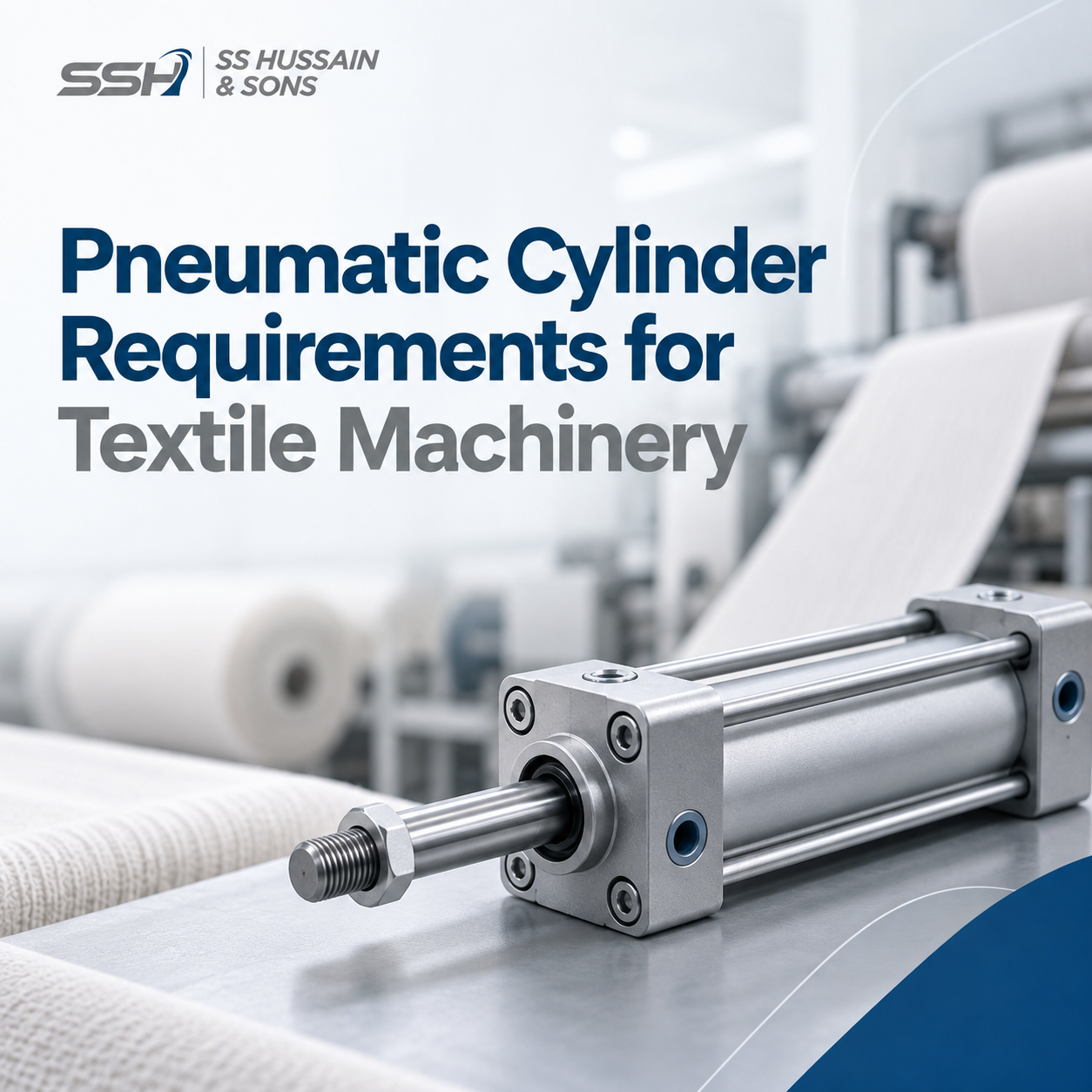
Pneumatic Cylinder Requirements for Textile Machinery
Quick Answer For textile machinery, a pneumatic cylinder needs to have the right bore size and stroke, as well as protection from lint, dust, humidity, and heat. Lint is the main cause of early cylinder failures in textile mills, and if you choose the right seal material and rod type for your mill’s working conditions,