
-
Address: Shahrah-e-Liaquat,
Serai Quarters 74000, Karachi -
Call Us: +92 319 3961178
Email Us: info@sshussain.com
Quick Answer
316L stainless steel is the right diaphragm seal material for most juice and dairy lines. Tantalum is only for very strong acids. Before you buy, check the fill fluid, the surface finish and the material certificate too, so the seal actually suits your process.
What Is a Diaphragm Seal and Why Does Its Material Matter?
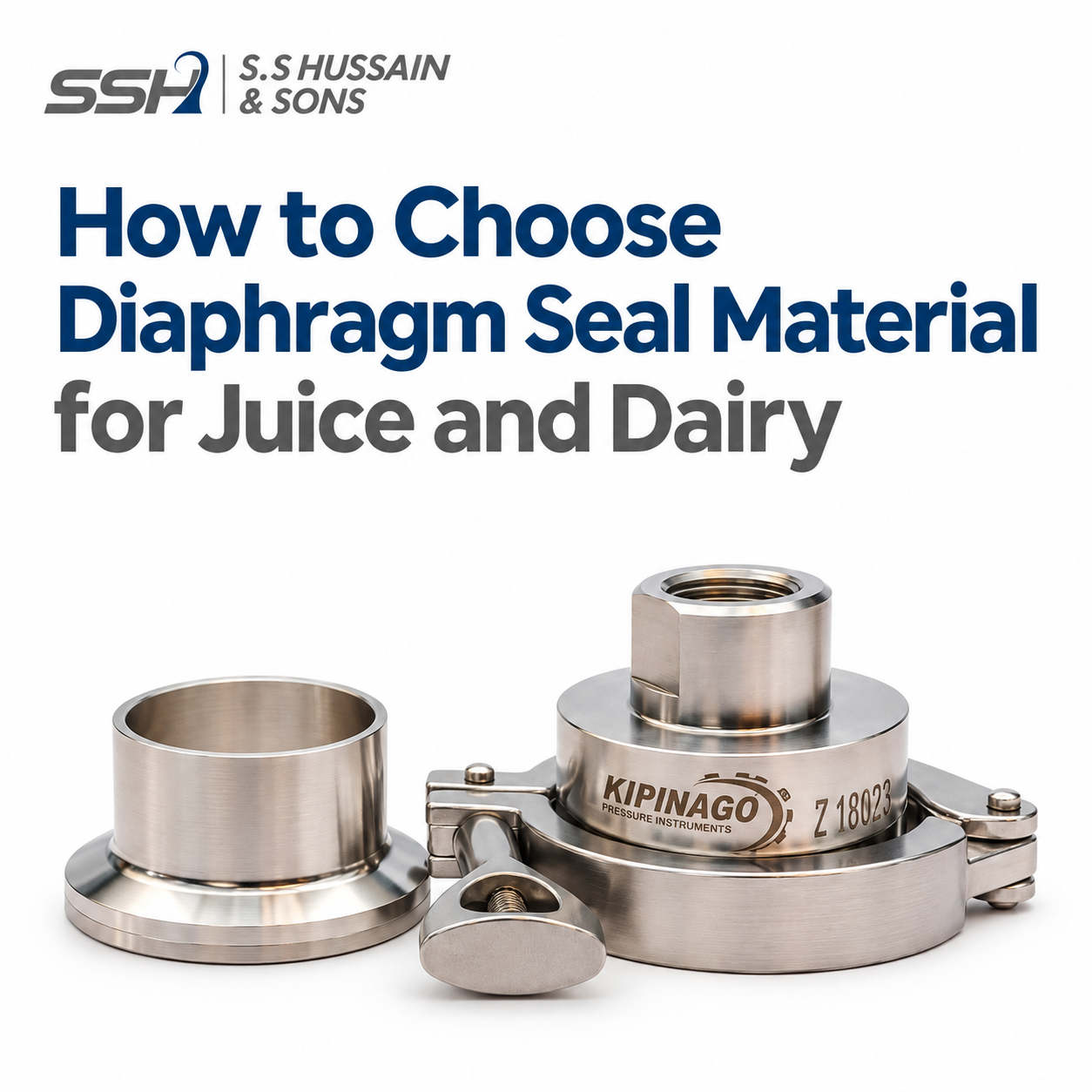
A diaphragm seal is a thin metal barrier between your product and a pressure instrument. It passes pressure to a pressure gauge or pressure transmitter through a fill fluid.
The diaphragm is the only part that touches your juice or milk, so the material has to suit your product. Pick the wrong one and it corrodes; then the seal fails. A flush diaphragm also stops particles from clogging the small gauge port.
Which Diaphragm Seal Material Is Best for Juice and Dairy Lines?
316L stainless steel is the best pick for most lines, and it’s the standard sanitary material. Here is how the options compare.
| Material | Best for | Watch out for |
| 316L stainless steel | Most juice and dairy lines | Check with your supplier if your cleaning chemicals contain chlorides |
Don’t pick 304 stainless steel just to save money. It handles acids and caustic CIP cleaners badly. CIP means cleaning in place, so the line gets cleaned without being taken apart.
Start with 316L. Move to something else only if your process forces you to.
What Material Works Best for Juice Lines?
316L is where you start. Citrus juice is acidic, which rules out 304.
Look at the cleaning chemicals and water in your process too. If they contain chlorides, ask your supplier to confirm 316L is fine, since chlorides cause pitting over time.
Pulp blocks a standard gauge port. A flush-diaphragm diaphragm seal fixes that because particles have nowhere to collect around the port.
Use 316L for juice lines, and if chlorides are present, get your supplier to confirm it.
What Material Works Best for Dairy Lines?
316L is the standard for dairy as well. The 3-A sanitary standard came out of the dairy industry, which is why buyers ask for it so often.
The bigger worry is CIP and SIP cleaning. SIP means sterilizing in place with steam or hot liquid. Caustic cleaners plus high temperatures put real stress on the seal and can hurt how it performs. Check the temperature rating before you order. Make sure the seal can take your cleaning cycles.
Use 316L for dairy lines and confirm the seal can handle your CIP and SIP cycles.
Does the Fill Fluid Matter for Food Lines?
Yes. The fill fluid sits behind the diaphragm and carries pressure to the instrument. If the diaphragm fails, that fluid can get into your product, so the choice matters.
Ask for a food-grade fill fluid that meets FDA requirements. Then match it to your process temperatures:
- Glycerin and water: 0 to 120 °C, food-grade options available
- Silicone oil: -40 to 200 °C. General use.
- High-temperature silicone, -20 to 300 °C (for CIP, SIP and steam)
Pick a food-grade fluid that can take your cleaning temperatures.
What Should You Check Before You Buy a Diaphragm Seal?
Four things to check before you place an order, so the seal fits your product and your cleaning process:
- Product and pH. Know what runs through the line, and its pH.
- Cleaning method: list your CIP and SIP chemicals and temperatures, then match the seal to them.
- Compliance. Ask for 3-A, EHEDG or FDA compliance, depending on what you need.
- Material certificate (ask for proof the seal is 316L; otherwise a supplier could sell you 304 as 316L).
Once you’ve picked the seal, calibrate it together with the instrument as one set. Our calibration service can do that.
Match the seal to your product, your cleaning process and your paperwork.
Conclusion
For most juice and dairy lines, go with 316L stainless steel. Pick a food-grade fill fluid, confirm the CIP and SIP ratings, and ask for a material certificate before you order. Not sure what suits your process? Contact SS Hussain & Sons or ask about our consultancy service.
FAQs
Is 316L stainless steel good enough for juice and dairy?
Yes, for most lines. It’s the standard sanitary material and copes with acidic juice and normal dairy use. If your cleaning chemicals contain chlorides, ask your supplier to confirm it suits your process.
What is the difference between 316L and 304 stainless steel?
316L resists acids and cleaning chemicals better. 304 can corrode when it meets acids and caustic CIP cleaners. 316L costs a little more but usually lasts longer in these conditions.
What fill fluid is safe for food lines?
Use a food-grade fluid that meets FDA requirements. Glycerin and water, or food-grade silicone, are the usual options. Match the temperature range to your CIP and SIP cycles.