
-
Address: Shahrah-e-Liaquat,
Serai Quarters 74000, Karachi -
Call Us: +92 319 3961178
Email Us: info@sshussain.com
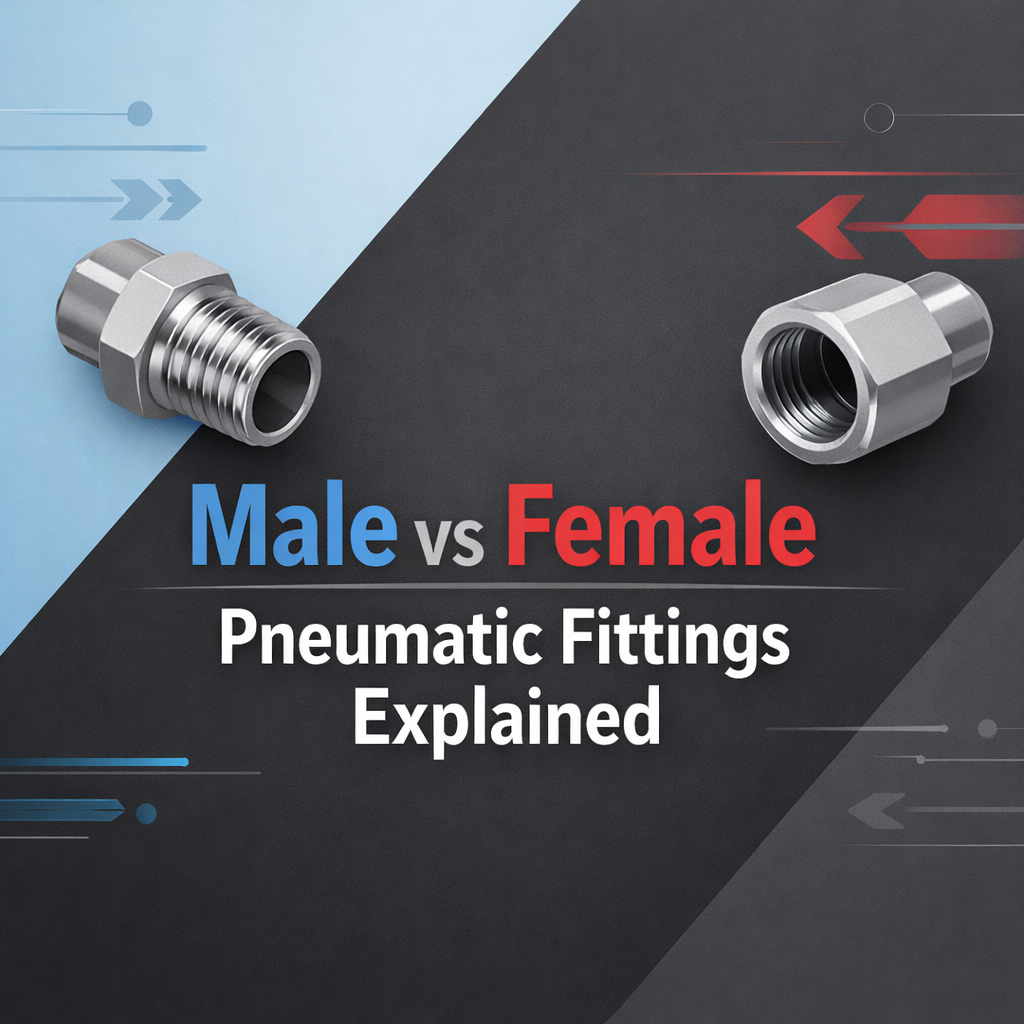
If you have ever ordered pneumatic fittings and felt unsure at checkout, you are not alone. Male and female pneumatic fittings sound simple, yet they are one of the most common reasons air systems leak, tools feel weak, or connections keep failing. Many people only realize something is wrong after installation, when fixing it costs time and money.
This guide clears that confusion from the start. It explains male vs female pneumatic fittings in a simple and practical way. By the end, you will know exactly which fitting to use, where to use it, and why it matters.
What is the difference between male and female pneumatic fittings
Male pneumatic fittings have threads on the outside of the fitting body. These threads screw into ports or fittings that have internal threads.
Female pneumatic fittings have threads on the inside. These threads receive a male fitting, hose end, or plug.
This small difference controls how the connection is made, how air pressure pushes inside the joint, and how wear shows up over time.
How male pneumatic fittings work in compressed air systems
Male pneumatic fittings are most often installed on fixed equipment. These include air compressors, pressure regulators, solenoid valves, pneumatic cylinders, manifolds, and FRL units.
These components usually come with female threaded ports. A male fitting screws into the port and stays there for long periods. Once installed properly, the connection is rarely disturbed.
When compressed air flows through the system, pressure pushes outward against the threads. Male fittings handle this well when seated into solid ports, which helps keep the connection stable during long operating hours.
How female pneumatic fittings are used in hoses and tools
Female pneumatic fittings are commonly used where movement happens or connections change often. You will usually find them on air hoses, drop lines, tool connections, and extension points.
Most air tools come with male plugs. A female fitting on the hose allows tools to be connected and removed easily without twisting the hose or stressing the air line. This keeps hoses in better condition and makes daily work smoother.
Female fittings are also used to connect two male fittings together or extend air lines when layouts change.
Where male pneumatic fittings are normally installed
Male pneumatic fittings are normally installed on equipment that stays in one place.
This includes compressors, control valves, pressure switches, air preparation units, and distribution blocks.
These locations benefit from fittings that stay tight under pressure and vibration and do not need frequent removal.
Where female pneumatic fittings are normally installed
Female pneumatic fittings are commonly used at service points.
This includes hoses, tool couplers, extension lines, and connection points where equipment is changed or moved.
Because the threads sit inside the fitting body, they stay protected from damage caused by handling and exposure.
Why thread type matters for sealing and performance
Thread type plays a major role in sealing. Common pneumatic thread standards include BSP, NPT, and metric threads.
A male fitting with one thread type can sometimes screw into a female port with a different thread standard and still feel tight. Even so, the seal is often poor. Small air leaks appear and usually go unnoticed at first.
These leaks waste compressed air and make compressors run longer. Matching thread standards before choosing male or female pneumatic fittings prevents this issue.
How sealing works in male and female pneumatic fittings
Male pneumatic fittings usually rely on thread seal tape or liquid sealant. The sealant fills small gaps between threads and stops air from escaping. Using too little sealant leads to leaks. Tightening too much can damage threads or crack ports.
Female pneumatic fittings rely on the male fitting seating evenly inside the internal threads. Dirt, damaged threads, or poor alignment can stop proper sealing.
Hoses that pull sideways can disturb the seal. Swivel female fittings are often used on flexible hoses to reduce this stress and keep the seal stable.
How fitting choice affects airflow and pressure
Airflow problems often start at connection points. When fittings are mismatched or not fully seated, the internal air path becomes uneven.
This uneven path creates turbulence. In pneumatic tools and cylinders, turbulence reduces usable pressure even if the compressor shows normal output.
Correct fitting size, matching threads, and proper installation keep airflow smooth and pressure steady.
How fittings wear over time in real use
Male fittings that are removed and reinstalled often can wear internal threads in aluminum or brass ports. Once threads wear, sealing becomes difficult even with new fittings.
Female pneumatic fittings handle repeated connections better because their threads are protected inside the fitting body.
For this reason, fixed equipment usually uses male fittings, while service points use female fittings.
How vibration, heat, and environment affect fittings
Vibration can loosen fittings over time if sealing is weak. Male fittings installed on vibrating equipment need proper sealing to stay tight.
Temperature changes cause metal to expand and contract. In outdoor systems or high-heat environments, sealing quality becomes more noticeable.
Dust, moisture, and chemicals damage exposed threads faster. Female fittings reduce exposure by keeping threads inside the fitting body.
Conclusion
Male and female pneumatic fittings may look like small parts, yet they shape how compressed air systems perform every day. Knowing how threads connect, how sealing works, and where wear happens helps avoid leaks, weak tools, and repeated fixes.
If you want pneumatic fittings that match the right thread standards and real working conditions, SS Hussain can help you choose correctly from the start. Reach out today and get the right fitting before small issues turn into costly downtime.
FAQs
Which pneumatic fitting seals better, male or female
Sealing quality depends more on thread type, surface condition, and installation method than on whether the fitting is male or female. Male fittings seal well when the thread standard matches and sealant is applied correctly. Female fittings seal well when the internal threads are clean and the male fitting seats evenly without side pressure.
Can male and female pneumatic fittings be mixed across different brands
Male and female pneumatic fittings from different brands can work together if the thread type, size, and standard are exactly the same. Problems usually appear when thread angles or tolerances differ slightly. This often causes slow air leaks that are hard to notice at first.
Why do pneumatic fittings feel tight but still leak air
A fitting can feel tight even when it does not seal properly. This usually happens when thread standards are mismatched or when threads bottom out before sealing surfaces meet. The fitting resists turning but air still escapes through microscopic gaps.
When should thread seal tape be used on pneumatic fittings
Thread seal tape is commonly used on male pneumatic fittings with tapered threads. It fills small gaps between threads and helps prevent air leakage. Seal tape is usually not needed on fittings that use O-rings or face seals, as these rely on surface contact rather than thread sealing.