
-
Address: Shahrah-e-Liaquat,
Serai Quarters 74000, Karachi -
Call Us: +92 319 3961178
info@sshussain.com
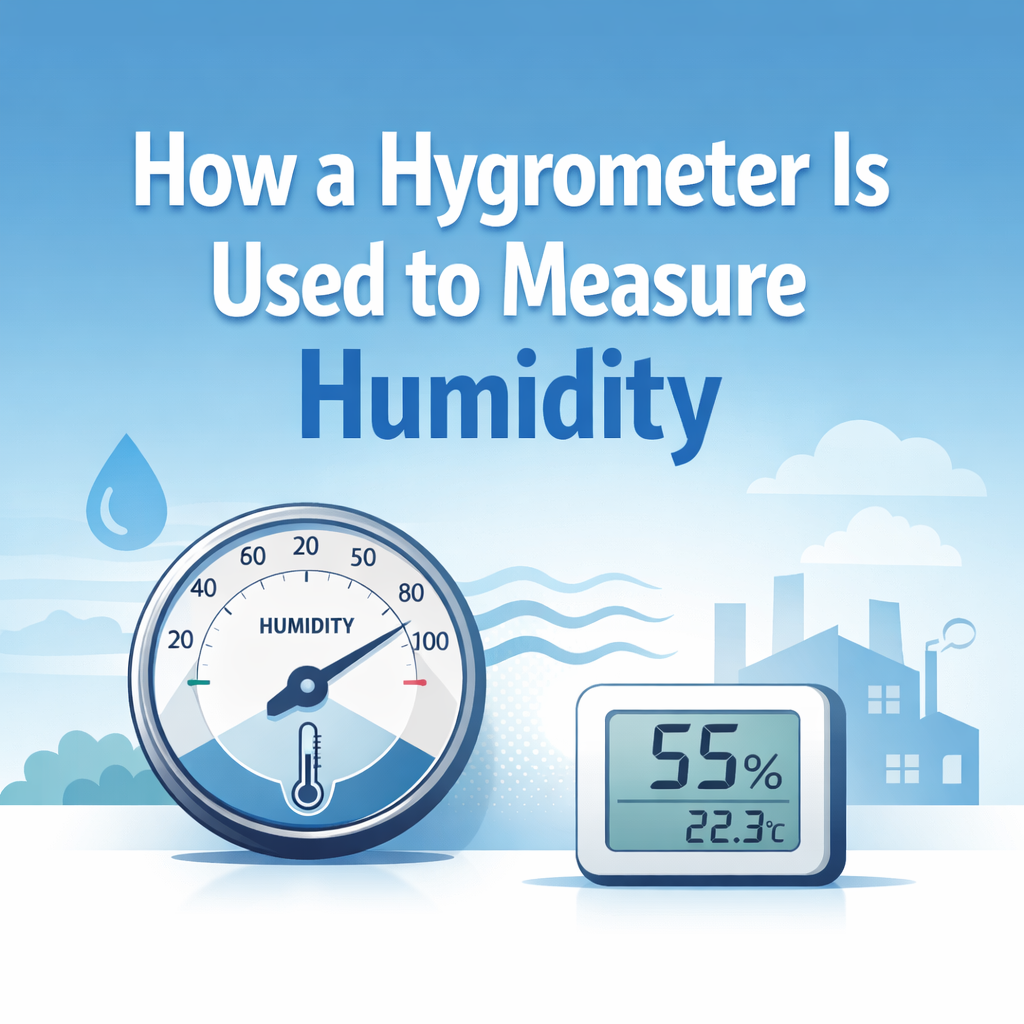
A hygrometer measures humidity by sensing how moisture in the air affects a material or sensor and then showing that change as a humidity percentage. This single reading helps people control comfort, protect stored items, and avoid moisture damage in homes, offices, and industrial spaces.
Humidity often causes problems quietly. Walls feel damp, metal starts rusting, paper curls, food spoils faster, and air feels uncomfortable. A hygrometer brings clarity by showing what the air is actually doing instead of guessing.
What humidity means in daily life
Humidity is the amount of water vapor present in the air. Even air that feels dry contains moisture. This moisture level changes as temperature changes.
Warm air can hold more moisture than cold air. Because of this, humidity readings often rise when the temperature drops, even if no water is added to the air. This is why humidity feels different in the morning, afternoon, and night.
Most hygrometers show relative humidity. This is a percentage that compares the current moisture in the air to the maximum it can hold at that temperature.
What a hygrometer measures
A hygrometer measures how moisture in the air affects certain materials or sensors inside the device. It does not measure liquid water or steam.
When humidity changes, materials inside the hygrometer move slightly or electrical signals change. The device converts this response into a number that shows the humidity level clearly.
How mechanical hygrometers measure humidity
Mechanical hygrometers use materials that react naturally to moisture.
One common design uses treated hair fibers. When the air becomes more humid, the hair absorbs moisture and stretches slightly. When the air becomes drier, it contracts. This movement turns a needle on a dial.
Other mechanical hygrometers use moisture sensitive paper or thin metal strips. These materials bend as humidity changes. Gears amplify the movement so the reading is easy to see.
Mechanical hygrometers work without electricity and respond slowly. This makes them suitable for places where humidity changes gradually, such as storage rooms and greenhouses.
How electronic hygrometers sense moisture
Electronic hygrometers use sensors that react to moisture by changing electrical properties.
Capacitive sensors absorb water vapor into a thin layer. As moisture increases, the electrical signal changes. The device measures this change and converts it into a humidity reading.
Resistive sensors work by measuring how moisture affects electrical resistance. These sensors respond quickly and are often used in HVAC systems and industrial environments.
Electronic hygrometers are useful where humidity changes frequently.
How digital hygrometers display readings
Digital hygrometers combine electronic sensors with a processor. The processor stabilizes the reading and adjusts it using temperature data.
Most digital hygrometers show both humidity and temperature on the screen. Many models store daily high and low values, which helps spot patterns like night time moisture buildup or dry air during heating hours.
Some digital hygrometers record data over time, which is helpful in warehouses, laboratories, and production areas.
Where a hygrometer should be placed
Placement affects accuracy.
A hygrometer placed near windows, doors, heaters, or air vents may show misleading readings due to air movement and temperature changes.
For indoor spaces, placing the hygrometer at average room height and away from airflow gives a clearer picture. In storage areas, placing it near stored items provides more useful readings.
Incorrect placement is a common reason for inaccurate humidity readings.
How to understand hygrometer readings
Humidity readings should be read along with temperature.
For most living spaces, humidity between 40 and 60 percent feels balanced. Lower humidity helps protect electronics and metal items. Paper, textiles, and wooden items stay stable when humidity remains steady.
Instead of checking one reading, observing changes over time gives better understanding of indoor conditions.
How hygrometers stay accurate
Over time, hygrometer sensors may drift due to dust, age, or environmental exposure. Calibration corrects this drift.
A simple calibration method uses salt and water in a sealed container, which creates a stable humidity level. Comparing the hygrometer reading inside the container shows whether adjustment is needed.
Calibration is common in laboratories, pharmaceutical storage, and controlled industrial environments.
Common mistakes when using a hygrometer
One common mistake is checking the reading immediately after moving the device. Hygrometers need time to adjust to new air conditions.
Another mistake is relying on one reading instead of tracking changes throughout the day.
Ignoring temperature readings also leads to confusion, since humidity depends on temperature.
Where hygrometers are used
Hygrometers are used in homes to manage comfort and reduce mold risk. Warehouses use them to protect packaging and raw materials. Food storage areas use them to reduce moisture related damage.
Museums rely on hygrometers to protect artworks and documents. Data centers control humidity to reduce static electricity. Greenhouses use humidity readings to support plant growth.
Choosing the right hygrometer
Mechanical hygrometers work well for basic monitoring. Digital hygrometers provide clearer readings and trend tracking. Industrial hygrometers support automation and alarms.
The right choice depends on where the device will be used and how precise the reading needs to be.
Conclusion
A hygrometer measures humidity by converting moisture response into clear data that shows how much water vapor is present in the air. When you understand how it works and how to read it, humidity becomes easy to control instead of something to guess.
If you want accurate humidity measurement that stays reliable over time, SS Hussain offers quality hygrometers suited for homes, commercial spaces, and industrial environments. The right hygrometer can prevent moisture damage, improve comfort, and protect valuable materials. Choosing a trusted instrument today saves time, cost, and effort later.
FAQs
How accurate is a hygrometer for measuring humidity indoors?
A hygrometer is accurate when it is placed correctly and allowed time to adjust to the room. Digital hygrometers usually provide higher accuracy for indoor humidity measurement because they respond quickly to changes and adjust readings using temperature data. Mechanical hygrometers are slightly slower but still reliable for steady environments. Accuracy improves when the device is kept away from air vents, sunlight, and doors.
Can a hygrometer give wrong humidity readings even if it is working?
Yes, incorrect readings can happen due to placement rather than device failure. A hygrometer placed near a heater, window, or air vent may show higher or lower humidity than the rest of the room. Sudden temperature changes also affect readings. Allowing the hygrometer to settle for a few hours in one location usually corrects this issue.
How long does a hygrometer take to show correct humidity after moving it?
Most hygrometers need 20 to 60 minutes to adjust after being moved to a new space. Digital hygrometers may stabilize faster, while mechanical ones take longer. Reading humidity too quickly after relocation often leads to confusion. Waiting allows the sensor to adapt to the new air conditions.
Why does humidity change even when no water is added to the room?
Humidity changes because air temperature changes. Warm air holds more moisture than cool air. When air cools down, relative humidity rises even if the moisture level stays the same. This is why humidity readings often increase at night and decrease during warmer parts of the day.
Is temperature necessary to understand hygrometer readings?
Yes, temperature and humidity work together. A humidity reading without temperature context can be misleading. The same humidity percentage feels different in warm and cool air. This is why many hygrometers display both values. Understanding both helps prevent condensation, dryness, and material damage.