
-
Address: Shahrah-e-Liaquat,
Serai Quarters 74000, Karachi -
Call Us: +92 319 3961178
Email Us: info@sshussain.com
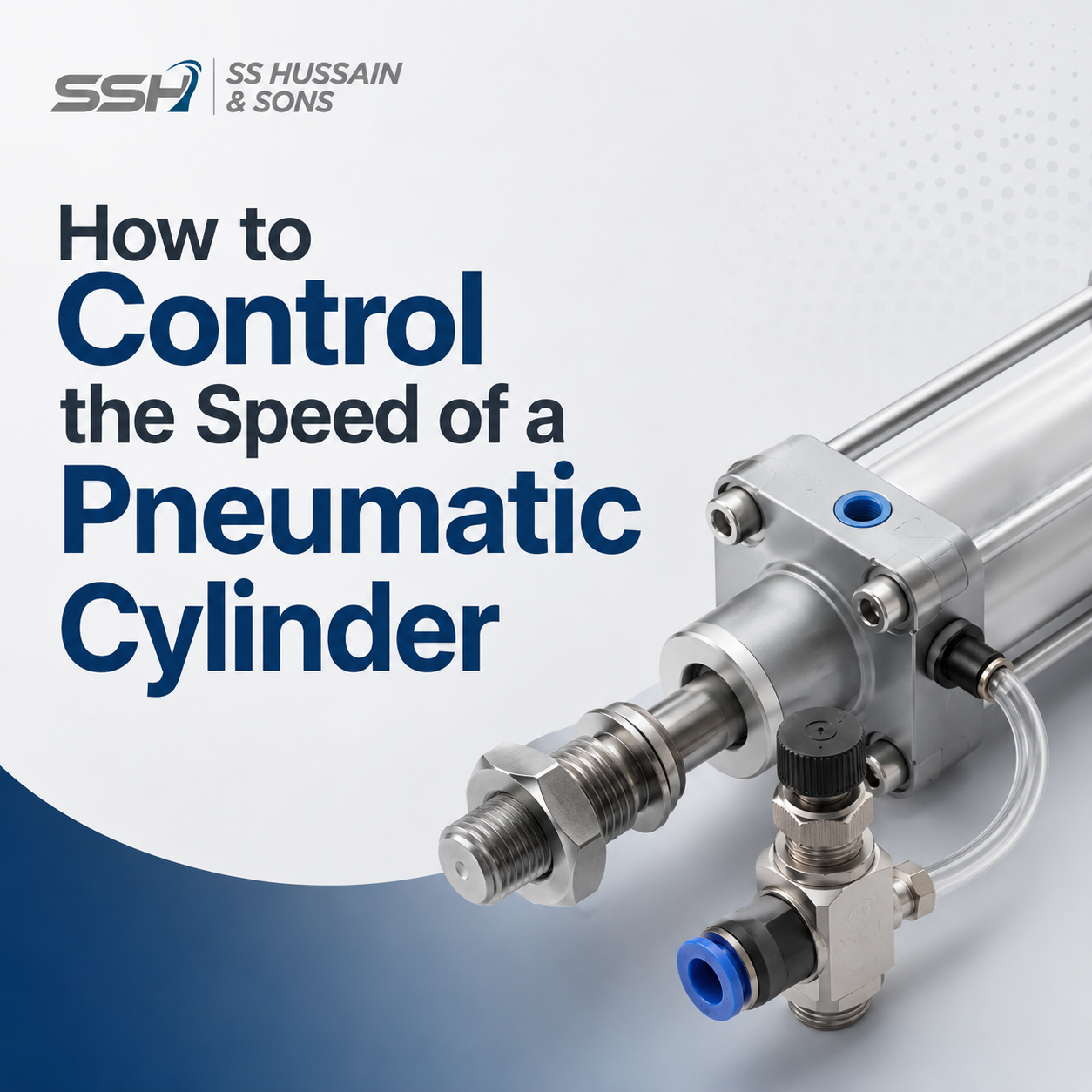
A pneumatic cylinder can make or break the way a machine performs. When it moves at the right speed, everything feels smooth and controlled. When it doesn’t, you’ll notice hard impacts, shaky movement, damaged parts, or slower production. The good news is that fixing the speed is usually much easier than replacing expensive components. A few smart adjustments can completely change how your pneumatic system performs.
What Controls the Speed of a Pneumatic Cylinder?
The speed of a pneumatic cylinder depends mainly on airflow. The faster compressed air can move into and out of the cylinder, the faster the piston moves. Air pressure still matters because it provides the force needed to move the load, but airflow is what controls the movement speed.
Several parts affect pneumatic cylinder speed control, and they all work together.
| Part | Effect on Cylinder Speed |
| Flow control valve | Adjusts the airflow |
| Air pressure | Changes the available force |
| Cylinder size | Larger cylinders need more air |
| Load weight | Heavier loads usually reduce speed |
| Air tubing and fittings | Small or blocked lines restrict airflow |
| Directional valve | Controls how much air reaches the cylinder |
| Air quality | Dirt and moisture can reduce smooth movement |
If one of these parts is not working properly, the cylinder may become slow, jerky, or inconsistent even though the cylinder itself is perfectly fine.
How to Control the Speed of a Pneumatic Cylinder
The easiest way to adjust air cylinder speed is by using a pneumatic flow control valve, sometimes called a speed control valve.
Instead of changing the air pressure, this valve controls how much compressed air can pass through the air line. Open it slightly and the cylinder moves faster. Close it slightly and the movement becomes slower and easier to control.
A simple adjustment method works well in most applications.
- Close the flow control valve until the cylinder moves slowly.
- Run the cylinder through several complete strokes.
- Open the valve a little at a time.
- Stop once the cylinder moves smoothly without striking the end of its stroke.
It only takes a small adjustment to make a noticeable difference.
Why Is Meter Out Flow Control Used So Often?
Flow control valves can be installed in two different ways.
Meter In Flow Control
Meter in flow control limits the air entering the cylinder. It is suitable for light loads where gravity or the load itself is not affecting the movement.
Meter Out Flow Control
Meter out flow control limits the air leaving the cylinder. This gives better control over the piston because the escaping air slows the movement naturally.
That is why meter out flow control is commonly used with double acting pneumatic cylinders. It also works well for lifting, lowering, pushing, and moving loads that change in weight during operation.
Why Lowering Air Pressure Is Not the Best Fix
Many people reduce the air pressure when a cylinder moves too fast. It may seem like the quickest solution, but it usually creates another problem.
Lower pressure also means less force.
Imagine a cylinder pushing empty cartons across a conveyor. It may work perfectly. Fill those cartons with products and the same cylinder may struggle to complete its stroke because there is no longer enough force.
The easiest way to remember it is this.
- Use an air regulator to control force.
- Use a flow control valve to control speed.
This approach gives much better results and makes troubleshooting much easier later.
What Else Can Slow Down a Pneumatic Cylinder?
A slow cylinder does not always mean the cylinder is faulty.
Sometimes the problem is hiding somewhere else in the compressed air system.
A blocked silencer can slow the exhaust air. A dirty air filter can reduce airflow. Small fittings, leaking air lines, worn directional valves, or damaged seals can all affect pneumatic actuator speed.
One small restriction is enough to change how the cylinder behaves.
Checking these parts before replacing the cylinder can save both money and unnecessary downtime.
Why Does Cylinder Speed Change During the Day?
Have you ever noticed a cylinder running perfectly in the morning and then becoming slower later?
That usually points to the air supply instead of the cylinder.
As more machines start using compressed air, the compressor has to work harder. If it cannot supply enough airflow, cylinder speed begins to drop. Dirty filters, pressure changes, air leaks, and moisture inside the air lines can also cause the speed to change throughout the day.
Watching the machine through several production cycles usually reveals where the problem starts.
How Clean Compressed Air Improves Performance
Clean compressed air keeps every pneumatic component working the way it should.
Dust, water, rust particles, and oil contamination slowly build up inside valves and cylinders. Over time, they increase friction and make the piston move less smoothly.
A simple maintenance routine prevents many common problems.
- Replace clogged air filters.
- Drain water from air receivers.
- Check the filter regulator regularly.
- Repair air leaks quickly.
- Replace worn seals before they fail.
These simple jobs help maintain consistent pneumatic cylinder speed, improve reliability, and reduce unexpected breakdowns.
How End Cushioning Protects the Cylinder
Many pneumatic cylinders include adjustable end cushioning.
As the piston reaches the end of its stroke, the cushion slows it down before it contacts the end cap. This reduces vibration, protects seals, and extends the life of the cylinder.
If the cushion is too loose, the piston can hit the end cap with unnecessary force. If it is adjusted too tightly, the cylinder may slow down near the end of its travel.
A few small adjustments are usually all it takes to find the right balance.
What Happens If the Flow Control Valve Is Installed Incorrectly?
Flow control valves are directional, so they must be installed correctly.
If the valve is fitted backwards, the cylinder may move smoothly in one direction and much faster in the other. It can also become difficult to adjust because the airflow is being controlled from the wrong side.
Checking the flow direction before installation saves a lot of unnecessary troubleshooting later.
Common Mistakes to Avoid
Many cylinder speed problems come down to small setup mistakes.
- Adjusting pressure instead of airflow.
- Using air tubing that is too small.
- Ignoring air leaks.
- Replacing the cylinder before checking filters and valves.
- Skipping maintenance on the compressed air system.
- Testing the cylinder without its normal working load.
Fixing these simple issues often restores smooth cylinder movement without replacing a single part.
Conclusion
Getting the speed right is one of the easiest ways to improve the performance of a pneumatic machine. Smooth movement reduces wear, improves accuracy, and helps your equipment run efficiently every day.
If you’re looking for the right pneumatic cylinder, flow control valve, speed control valve, air regulator, FRL unit, or any other pneumatic component, SS Hussain is ready to help. We can help you choose the right product for your application, so you get reliable performance from the start instead of wasting time and money on trial and error.
Frequently Asked Questions
How do I know if my pneumatic cylinder is moving too fast?
A pneumatic cylinder is likely moving too fast if it hits the end of its stroke with a loud impact, causes machine vibration, or creates excessive wear on seals and mounting parts. A properly adjusted cylinder should complete its movement smoothly without sudden shocks.
Can one flow control valve adjust both extension and retraction speed?
Not always. If you need different speeds for extension and retraction, separate flow control valves are usually installed on each port of a double acting pneumatic cylinder. This allows independent adjustment in both directions.
Does a larger pneumatic cylinder move slower than a smaller one?
A larger pneumatic cylinder can move slower because it needs a greater volume of compressed air to fill the cylinder before the piston travels. The final speed depends on airflow, valve size, air pressure, and the load being moved.
What size flow control valve should I use for a pneumatic cylinder?
The flow control valve should match the airflow requirements of the cylinder and the air line. A valve that is too small restricts airflow and limits speed, while an oversized valve can make fine adjustments more difficult.