
-
Address: Shahrah-e-Liaquat,
Serai Quarters 74000, Karachi -
Call Us: +92 319 3961178
info@sshussain.com
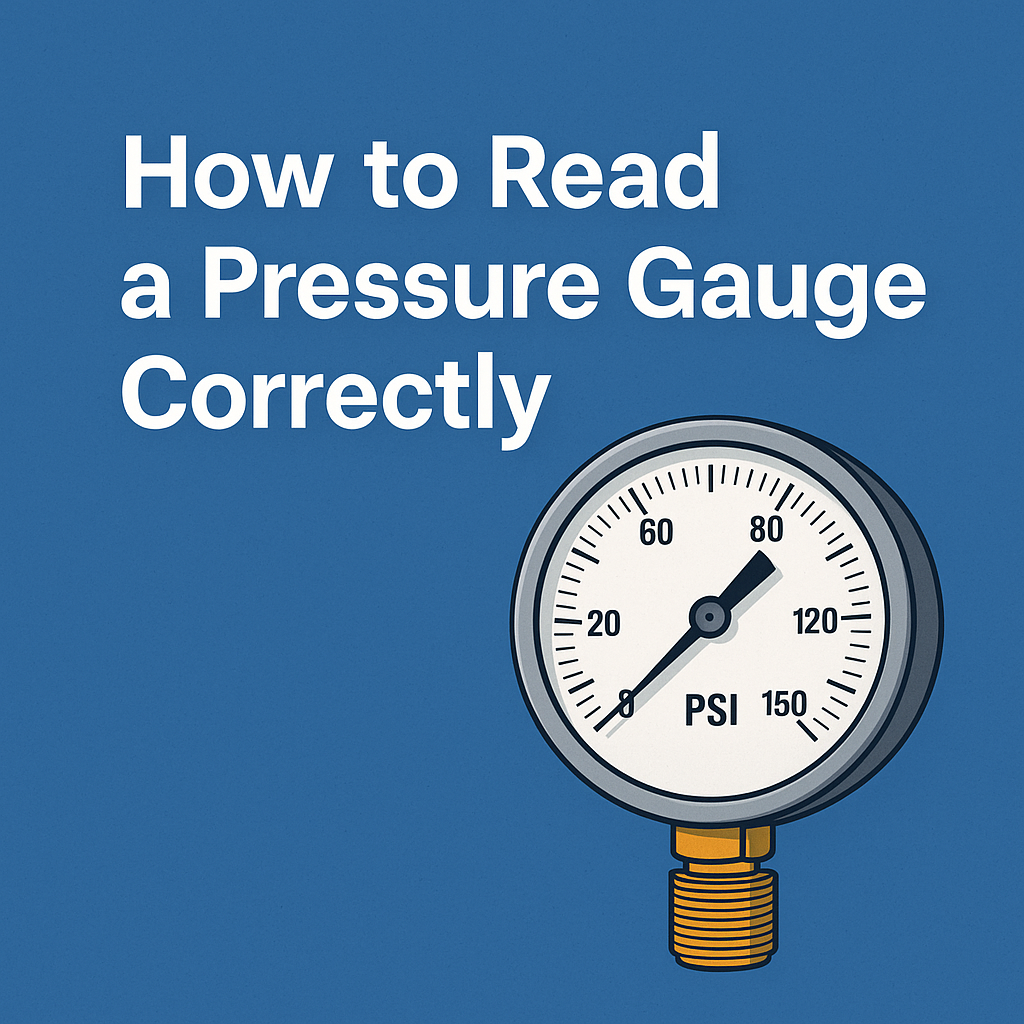
Reading a pressure gauge correctly means understanding the scale, the needle movement, the units, and the condition of the gauge. This helps you keep your system safe and stable.
What Does a Pressure Gauge Show?
A pressure gauge shows how much pressure is inside a tank, pipe, line, or machine.
It compares the internal pressure with the air around you, which is called gauge pressure.
Most gauges display PSI, bar, kPa, or kg/cm². You only need to focus on the unit your equipment uses.
If the needle sits slightly above or below zero when the system is open, it can be due to natural changes in atmospheric pressure.
Why Is Reading a Pressure Gauge Correctly Important?
A correct pressure reading helps you prevent pressure spikes, drops, and mechanical strain.
The gauge becomes the first sign of any change inside the system.
A clear reading lets you avoid shutdowns, leaks, slow flow, and unexpected pressure build-up.
This is why proper reading skills matter in workshops, factories, homes, and industrial setups.
How Do Different Pressure Gauges Work?
Different gauges read pressure in their own way, so needle movement depends on the design.
How Does a Bourdon Tube Gauge Work?
It uses a curved metal tube that straightens when pressure increases.
The tube movement turns the needle across the scale.
How Does a Digital Pressure Gauge Work?
It uses sensors and shows the value on a screen.
This makes reading easier when the gauge is mounted in a tight area.
How Does a Differential Pressure Gauge Work?
It compares pressure between two points.
It is used in filters, HVAC systems, and ventilation lines.
How Does a Liquid Filled Gauge Work?
It is filled with glycerin or silicone to reduce needle vibration.
This helps when the system has continuous shaking or pulsation.
How to Read a Pressure Gauge Step by Step
A steady, direct reading gives you the most accurate result.
Step 1: Check the Unit on the Dial
Only follow one scale.
If your equipment uses PSI, read the PSI markings only.
Step 2: Let the Needle Settle
If it shakes, tap the front lightly to stabilise it.
Step 3: Read the Exact Mark
See where the needle lands.
If it falls between two lines, estimate the number by dividing the gap mentally.
Step 4: Notice the Needle Behavior
A needle that climbs slowly, jumps too fast, or lags behind the system often signals blockage or damage.
Step 5: Watch the Zero Position
The needle should return to zero when the system is depressurised.
If not, the gauge may be worn out from pressure spikes or vibration.
What Units Do Pressure Gauges Use and What Do They Mean?
Units help you understand how strong the pressure is inside the system.
PSI
Used widely in compressors, pumps, and workshop tools.
Bar
Seen in industrial equipment and machinery.
kPa
Common in HVAC systems and engineering setups.
kg/cm²
Found on older gauges or imported instruments.
Choose a gauge unit based on your equipment manual for consistent readings.
Why Do Pressure Gauges Give Wrong Readings?
Gauge accuracy can fall over time because of heat, vibration, overload, or clogging.
Reason 1: Vibration
Continuous shaking weakens internal parts and makes the reading unstable.
Reason 2: Heat Exposure
Heat expands metal inside the gauge and shifts the needle.
Reason 3: Pressure Pulses
Fast pressure changes make the needle jump.
Reason 4: Blocked Entry
Dust, debris, or dried oil slows the pressure response.
Reason 5: Past Overpressure
If the gauge ever faced pressure beyond its limit, the internal tube may have bent.
This makes the gauge unreliable even if it looks normal.
When Should You Check or Replace a Pressure Gauge?
A gauge should be checked every few weeks, or earlier if the system vibrates, heats up, or runs outdoors.
Sensitive applications like labs or food processing require regular calibration.
Replace the gauge if you see:
- Needle stuck at one point
- Needle not returning to zero
- Slow or jumpy response
- Fog inside the glass
- Visible dents or cracks
Comparing with a trusted gauge once is a quick way to confirm accuracy.
How Do You Keep a Pressure Gauge Accurate for Long Use?
A few simple habits protect the reading quality.
- Install the gauge upright for natural needle movement.
- Keep it away from heat sources.
- Use a gauge with a higher range than the system’s usual pressure.
- Choose a liquid filled gauge if your system vibrates.
- Add a snubber if the pressure line pulses often.
- Clean the gauge port when doing routine maintenance.
These steps help the needle move smoothly and keep readings reliable.
How Does Knowing the Pressure Range Improve Gauge Reading?
Pressure gauges work best when the needle stays in the middle section of their scale.
Avoid running your system near the highest number printed on the gauge.
A simple rule is to select a gauge with twice the working pressure.
For example, if your system runs at 120 PSI, a 240 PSI gauge gives a stable reading and longer life.
Conclusion
Reading a pressure gauge becomes easier when you understand the scale, the needle movement, the units, and the signs of a failing gauge.
Clear readings help you maintain stable pressure, protect your equipment, and prevent system failure.
If you want dependable, accurate, and long lasting gauges, SS Hussain supplies trusted brands that perform well in real working conditions.
Reach out to SS Hussain to choose the right pressure gauge for your setup and maintain safe, consistent operation every day.
FAQs
1. How often should a pressure gauge be calibrated?
Most pressure gauges should be calibrated every 6 to 12 months.
Systems that run continuously, vibrate, or handle critical parameters may need calibration every 3 to 6 months.
2. What is the difference between gauge pressure and absolute pressure?
Gauge pressure compares system pressure to atmospheric pressure.
Absolute pressure compares system pressure to a perfect vacuum, so absolute pressure is always higher than gauge pressure by 1 atm (≈14.7 PSI).
3. Can a pressure gauge read negative values?
Yes. A gauge can read negative values if it is a compound gauge designed to show both vacuum and positive pressure.
A standard gauge cannot read negative pressure.
4. What causes a pressure gauge to fog up?
Fogging happens when moisture enters the gauge body.
This can be due to temperature changes, damaged seals, or humidity entering through the gauge vent.
5. Why do pressure gauges have a maximum operating temperature?
The internal metal tube and mechanical parts expand with heat.
If temperature exceeds the rated limit, the expansion shifts the needle and affects accuracy.