
-
Address: Shahrah-e-Liaquat,
Serai Quarters 74000, Karachi -
Call Us: +92 319 3961178
info@sshussain.com
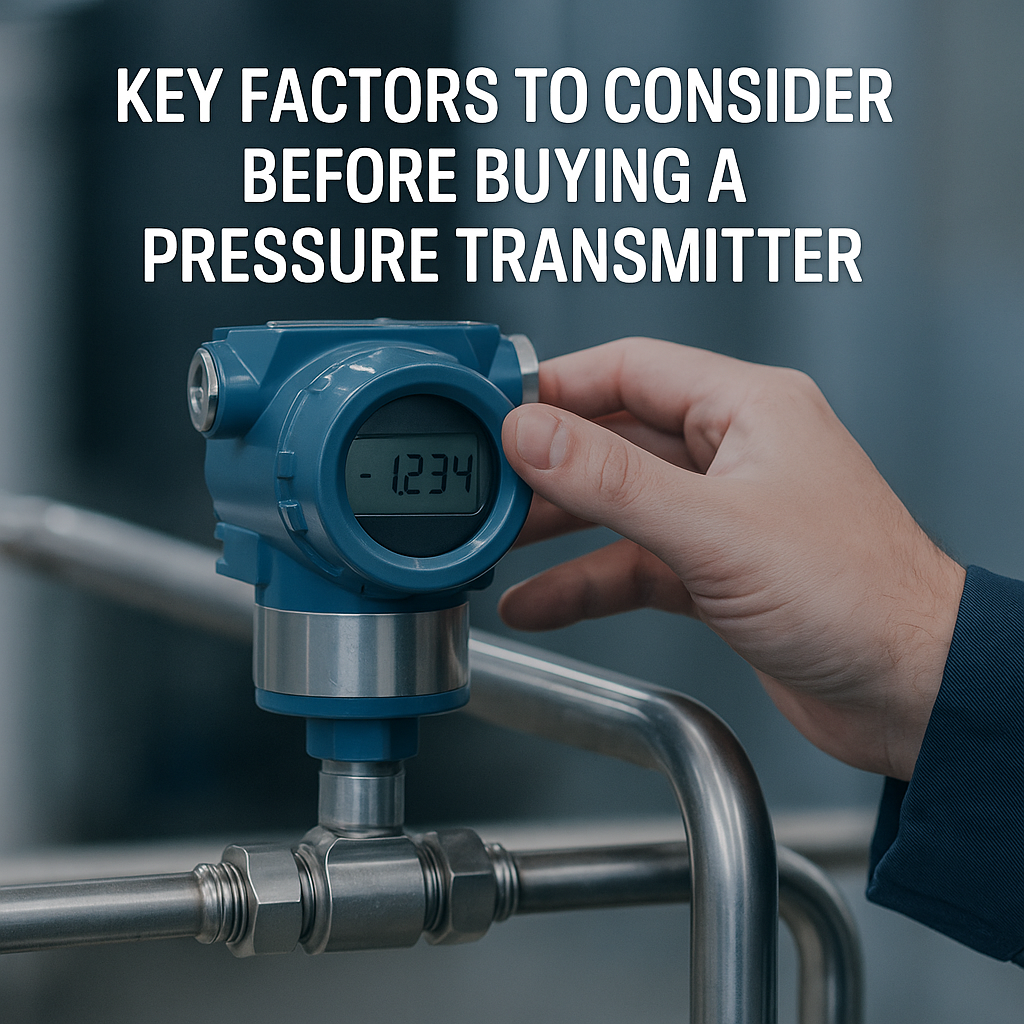
A pressure transmitter is an important part of many industrial systems. It turns pressure readings into electrical signals that help control machines and processes. But with so many models and features available, picking the right one can be confusing. Choosing the wrong transmitter can cause poor results, safety problems, and extra maintenance.
This guide explains the key things to look at before buying a pressure transmitter. It’s written clearly to help engineers, plant managers, and buyers make smart choices based on their needs.
Understand Your Application First
Before looking at features or brands, first think about where and how you’ll use the transmitter. What type of pressure are you measuring—gas, liquid, or steam? Does the process involve high pressure, very hot temperatures, or strong chemicals?
For example, if your system uses corrosive chemicals, the transmitter must be made from special materials like stainless steel or have a protective coating. If the process gets really hot, choose a model built to handle that heat. Skipping these steps can cause early damage or failure.
Know the Type of Pressure Measurement
There are three main types of pressure:
- Gauge pressure: Measures pressure compared to the air around us. This is common in most factories.
- Absolute pressure: Measures pressure compared to a vacuum (zero pressure). Used in vacuum systems or weather tools.
- Differential pressure: Compares pressure between two points. Used in filters, flow meters, or tanks.
If you choose the wrong type, the readings will be off. Always confirm what type your system needs before buying.
Accuracy Requirements Matter
Some systems need very accurate pressure readings. Others can work fine with basic accuracy. Buying a transmitter that’s more accurate than needed just adds cost. But if you go too low, the readings could hurt product quality or safety.
Look at the accuracy level on the product sheet. It’s usually shown as a percentage (like ±0.1%). Make sure this matches your system’s needs. Also check how the accuracy holds up over time, especially if your process must run the same way every day.
Look at Pressure Range and Overload Limits
Each transmitter is designed to measure pressure within a certain range. Make sure the one you choose covers your full pressure needs.
Also look at the overload limit, which tells you how much pressure the device can take without breaking. If your system has sudden pressure spikes, this limit is very important.
Process Connection and Installation Environment
The process connection is the part that joins the transmitter to your machine. Make sure it fits your system’s thread size and type.
Also think about where the transmitter will be installed. Will it be outside? Around moisture or dust? Choose a device with the right IP rating (protection level). For tough environments, go for IP67 or IP68.
Some places may need compact devices. Others may need the sensor to be mounted far from the machine. So look at mounting options as well.
Material Compatibility
The parts of the transmitter that touch the process fluid are called wetted parts. These must match the chemical being measured. If the material isn’t compatible, it could corrode or get damaged.
Stainless steel is good for regular use, but for harsh chemicals, you may need something stronger like Hastelloy or PTFE coating. Always check a chemical compatibility chart before choosing.
Output Signal Options
A pressure transmitter changes physical pressure into an electrical signal. The most common output types are:
- 4–20 mA (current signal)
- 0–10 V (voltage signal)
- Digital signals like HART, Profibus, or Modbus
Pick the signal that fits your system. The 4–20 mA signal is used most often because it works well even with long wires. If you plan to upgrade your system later, a transmitter with digital communication might be helpful for remote setup and checks.
Temperature Effects and Compensation
Most transmitters work fine at normal temperatures. But if your setup involves very hot or very cold areas, it may affect accuracy.
Check the working temperature range on the datasheet. Also see if the transmitter has temperature compensation, which helps it stay accurate even when the temperature changes.
Some models use remote diaphragms to keep heat away from the electronics. This helps them last longer in high-temperature processes.
Response Time and Stability
Response time means how quickly the transmitter reacts when pressure changes. If your system changes pressure fast—like in control loops or flow systems—you need a fast response.
If your process is steady and slow, a slower response time is okay.
Also look at long-term stability. Over time, some sensors start to drift and need recalibration. If you want less maintenance, choose a transmitter known for staying stable for longer.
Power Supply and Energy Use
Most transmitters run on 24V DC. But still, make sure the one you buy fits your system’s power setup.
Also check power consumption. If you have a lot of sensors or use battery power, choose a low-power model to cut down on energy use.
For remote locations, you can also find transmitters that are battery-powered or work wirelessly.
Manufacturer Reputation and Support
Quality and support from the supplier are as important as the product itself. Buy from a manufacturer with a good reputation for reliability and customer support.
You may need help with setup, calibration, or troubleshooting. A supplier with local presence, quick support, and proper documentation makes life much easier.
SS Hussain, for example, provides trusted industrial solutions with a focus on durability, customization, and customer support. Working with a supplier like this ensures you get what’s right for your operations.
Documentation and Certification
In many industries, such as pharmaceuticals or food processing, documentation and certifications are required. Make sure the pressure transmitter comes with calibration certificates and complies with industry standards like ISO, ATEX, or SIL if applicable.
This is also important for safety audits, legal compliance, and smooth inspections.
Total Cost of Ownership
The purchase price is only one part of the cost. Also consider how often the transmitter needs maintenance, how easy it is to install, and the cost of downtime if it fails.
A cheaper transmitter with low reliability can end up costing more due to frequent replacements or process failures.
Choose a balance between price, reliability, and performance. It’s better to spend a bit more on a reliable device than to risk losses later.
Conclusion
Choosing a pressure transmitter is more than just picking a model from a catalog. You need to consider the process type, environment, accuracy, materials, and long-term performance. Skipping these steps can lead to serious issues in your plant or system.
SS Hussain offers a range of high-quality pressure transmitters for different industries and applications. With expert advice, reliable products, and after-sales support, you’ll be getting an advantage for the long term.
Get in touch with SS Hussain today and let us help you choose the pressure transmitter that fits your exact requirements.