
-
Address: Shahrah-e-Liaquat,
Serai Quarters 74000, Karachi -
Call Us: +92 319 3961178
info@sshussain.com
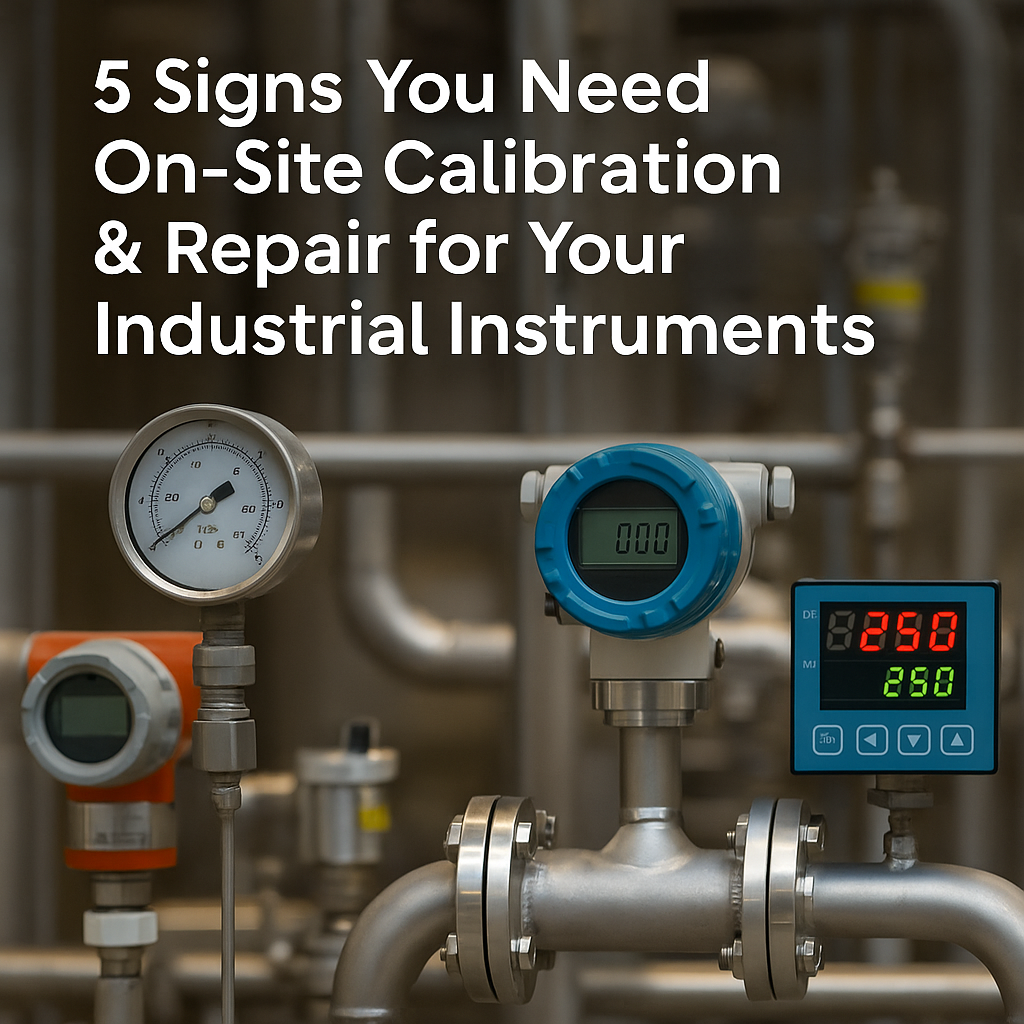
In any industrial setup, instruments are the backbone of control, measurement, and quality assurance. From pressure transmitters and flow meters to temperature gauges and controllers, these tools must work accurately day in and day out. But over time, even the most reliable industrial instruments can drift away from their original settings. This can lead to inefficiencies, unexpected failures, or serious quality issues.
On-site calibration and repair services are designed to solve this problem quickly and with minimal disruption. Knowing when it’s time to call in a technician can help you avoid breakdowns, stay compliant, and save money in the long run.
Let’s look at five clear signs that your instruments need attention and why on-site service might be the best solution.
1. Readings Are Inconsistent or Unstable
One of the earliest signs that an industrial instrument needs calibration is inconsistent data. If a flow meter shows different readings under the same operating conditions, or if a temperature sensor drifts even when the environment is steady, chances are it’s out of calibration.
This inconsistency might not seem like a big deal at first. But small measurement errors can lead to big problems over time especially in automated processes or systems where tight tolerances are critical. Even a slight deviation can throw off entire batches or affect the behavior of connected equipment.
On-site calibration allows technicians to adjust your instrument where it’s installed, using reference equipment to verify and restore accuracy. Since the process is done without removing the unit, it eliminates downtime and ensures the instrument is adjusted under its real working conditions.
2. Equipment Has Not Been Serviced in Over a Year
Calibration isn’t a one-time task. Most industrial instruments require servicing at least once a year, depending on their usage, environment, and manufacturer guidelines. Skipping these intervals increases the risk of hidden issues that could compromise performance without you realizing it.
In high-usage environments like chemical plants, oil and gas, or food processing, instruments are exposed to heat, vibration, moisture, and pressure fluctuations. These factors speed up wear and affect internal components.
If your records show that a pressure transmitter, flow meter, or other critical device hasn’t been calibrated or inspected in over 12 months, it’s time to schedule on-site service. This proactive step helps avoid unplanned shutdowns and extends the life of your equipment.
3. There Are Product Quality Issues or Process Variations
Have you noticed that product quality has started to drop, or that your production output is no longer consistent? Before checking raw materials or workflow settings, look at the instruments that monitor and control your process.
Industrial instruments that drift out of calibration can cause poor mixing, wrong temperatures, underfilling, or over-processing—depending on the system they control. These issues may appear as uneven textures, incorrect measurements, or failures to meet product specs.
In batch production, a single wrong reading can ruin an entire run. For continuous processes, small errors can lead to long-term inefficiencies or increased waste.
An on-site calibration technician can quickly identify which devices are affecting performance. They can also compare instrument output to certified standards, making sure you’re producing exactly what you intend.
4. There’s a Safety or Compliance Risk
In some industries, calibration is not just about performance but it’s also about safety and compliance. For example, in pharmaceutical, food, or chemical manufacturing, instruments must follow strict calibration schedules to meet safety regulations and international standards.
Outdated or inaccurate industrial instruments can lead to violations, penalties, or even shutdowns during audits. A faulty pressure sensor could also trigger incorrect valve behavior, causing an unsafe release or system overload.
If you’re preparing for an audit, certification, or insurance check, having a recent calibration record is essential. On-site service teams can perform both calibration and minor repairs, making sure everything is aligned with your compliance needs.
They also provide documentation and calibration certificates, which are often required for ISO, GMP, or regulatory inspections.
5. You’re Seeing Warning Alarms or Unexpected Shutdowns
If your system begins triggering alarms without clear causes, or if machinery is shutting down during normal operation, instrument faults could be the reason. Many industrial systems are set to respond to sensor input—so if a sensor fails or sends incorrect data, the system may enter a fault mode.
Unfortunately, many of these issues are misdiagnosed as mechanical problems. Companies end up replacing pumps, motors, or valves, only to find out later that a faulty sensor or miscalibrated flow meter was the real cause.
Bringing in a skilled on-site service team helps isolate the problem fast. They can test and adjust instruments on location without pulling apart your system. In some cases, they may repair the unit directly. In others, they may recommend a replacement if the instrument is beyond recovery.
Why On‑Site Calibration Is Often Better Than Sending Equipment Out
While lab-based calibration is useful for some tools, it doesn’t always reflect real operating conditions. On-site calibration means the instrument is tested and adjusted while it is still installed, accounting for how temperature, vibration, and installation affect its accuracy.
There are several other benefits:
- No disassembly or shipping required
- Faster turnaround compared to lab calibration
- Reduced risk of damage during transport
- Calibration under actual working conditions
- Immediate feedback from your operators to the technician
For plants that operate 24/7 or run time-sensitive projects, this is a practical and cost-effective approach.
What to Expect During On‑Site Service
A typical on-site calibration visit includes:
- Verifying the instrument against known reference standards
- Adjusting readings to meet the required accuracy
- Checking connections, sensor health, and stability
- Documenting the calibration and generating certificates
- Performing minor repairs or recommending next steps
Experienced technicians also review installation alignment, electrical integrity, and software settings. This gives you a complete picture of your system’s health and allows you to plan for future replacements or upgrades.
Additional Tip: Keep a Calibration Log
One of the simplest ways to manage your instruments is to maintain a calibration log. This record, whether digital or on paper, should include details like the instrument model, its location, the last calibration date, any adjustments made, the technician’s name, and notes on issues or recommendations. Over time, a well-maintained log helps identify which instruments are more prone to drift, simplifies audit preparation, and supports better planning for maintenance or replacements.
Final Verdict: A Quick Checklist
- Your instrument readings are inconsistent or unstable
- The equipment hasn’t been serviced in over a year
- You’re facing product quality issues or output variations
- There’s a compliance or safety risk due to outdated calibration
- Warning alarms or unexpected shutdowns are becoming frequent
If you notice even one of these signs, it’s time to take action. Reach out to SS Hussain to schedule an inspection or service appointment.