
-
Address: Shahrah-e-Liaquat,
Serai Quarters 74000, Karachi -
Call Us: +92 319 3961178
info@sshussain.com
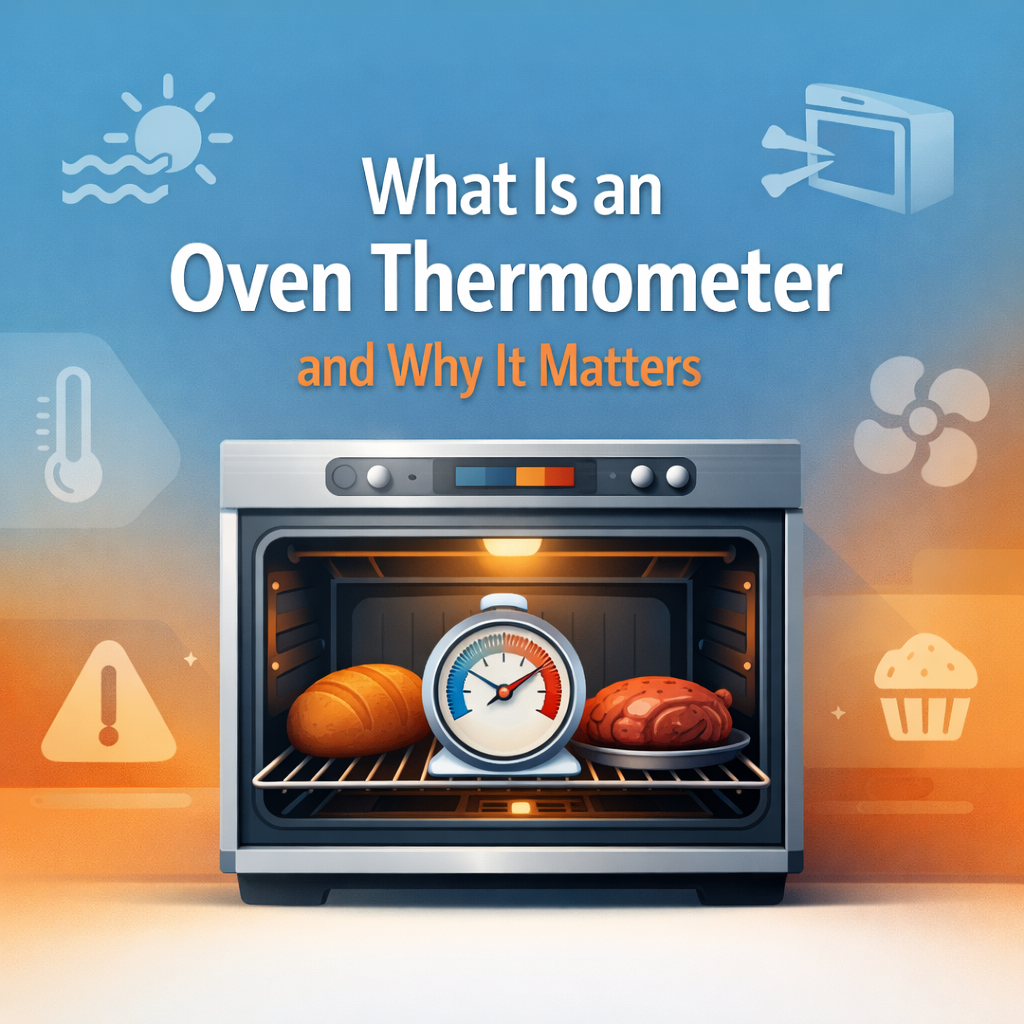
An oven thermometer is a small device that tells you the real temperature inside your oven while it is running. It matters because many ovens do not heat exactly to the temperature shown on the dial or screen. When cooking depends on heat accuracy, even a small difference can change the final result.
People often blame recipes when food does not cook properly. In many cases, the issue is the oven temperature. An oven thermometer helps clear that confusion by showing what is actually happening inside the oven.
What an Oven Thermometer Measures Inside an Oven
An oven thermometer measures the air temperature inside the oven cavity. This reading reflects the heat your food is exposed to during cooking or baking.
Ovens heat in cycles. The heating element turns on, the temperature rises, then the element switches off and the temperature slowly drops. The oven display usually shows an average value, not these real-time changes. An oven thermometer shows those changes clearly.
This explains why food can cook faster or slower even when the same temperature setting is used every time.
Why Oven Temperature Is Often Different from the Setting
Oven temperature differences are common and normal.
Over time, heating elements lose strength. Temperature sensors drift slightly. Door seals wear out and allow heat to escape. Even new ovens can be off by several degrees due to manufacturing tolerance.
Opening the oven door also causes sudden heat loss. The oven display may not reflect this drop accurately. An oven thermometer shows these changes instantly and helps you adjust.
How Oven Temperature Affects Baking and Roasting
Correct oven temperature controls texture, moisture, and doneness.
Baking needs steady heat. Bread depends on stable temperature to rise evenly. Cakes need controlled heat to set without sinking. Cookies spread and brown based on oven accuracy.
Roasting meat also depends on proper heat. Lower temperatures extend cooking time and can dry food. Higher temperatures cook the outside too quickly while the inside lags behind.
In professional kitchens and bakeries, temperature variation causes uneven batches and wasted ingredients.
Types of Oven Thermometers You Will See
Oven thermometers come in different forms depending on usage.
Analog oven thermometers use a metal coil that reacts to heat and moves a needle across a scale. They are simple, reliable, and do not need batteries.
Digital oven thermometers use electronic sensors. Many include probes that stay inside the oven while the display remains outside. This allows temperature checks without opening the door.
Commercial ovens often use fixed or panel-mounted thermometers. These are common in bakeries, restaurants, and food processing units where ovens run for long hours.
Where to Place an Oven Thermometer for Accurate Readings
Placement affects accuracy.
The center of the oven gives the most balanced reading. Placing the thermometer near walls, heating elements, or the door can show higher or lower temperatures than the rest of the oven.
Many ovens have hot and cool zones. Checking temperature in different areas helps identify these zones. Once known, food can be placed more evenly for consistent cooking.
After preheating, allow the oven to run for 10 to 15 minutes before reading the thermometer. Preheat indicators often turn off early.
How to Use an Oven Thermometer During Cooking
Using an oven thermometer is straightforward.
Place it in the center of the oven before preheating. Set the oven to your desired temperature. Once the oven stabilizes, check the thermometer reading.
If the thermometer shows a higher temperature, lower the oven setting slightly. If it shows a lower temperature, raise the setting. This adjustment improves accuracy without changing recipes.
Over time, you will learn how your oven behaves and make quicker corrections.
Why Oven Thermometers Are Used in Commercial Kitchens
Commercial kitchens rely on temperature accuracy for quality and safety.
Bakeries use oven thermometers to maintain consistent color and texture. Restaurants depend on accurate ovens to meet food safety requirements. Food processing units use them to keep production consistent across batches.
Commercial oven thermometers are designed for long use, clear readability, and stable performance under high heat. Stainless steel construction is common because it handles heat well and lasts longer.
Choosing the Right Oven Thermometer for Your Use
Home kitchens benefit from easy-to-read analog or digital oven thermometers with good heat resistance.
Commercial users need thermometers designed for continuous use, wide temperature ranges, and stable accuracy.
Choosing temperature instruments from manufacturers with experience in industrial measurement improves reliability and long-term performance.
When an Oven Thermometer Becomes Necessary
An oven thermometer becomes useful when baking results feel inconsistent, cooking times seem unreliable, or food browns unevenly.
It is also helpful after buying a new oven, replacing heating elements, or noticing changes in cooking performance.
Regular use helps spot temperature drift early and avoid cooking issues.
Conclusion
An oven thermometer shows the real temperature inside your oven and removes the guesswork from cooking. It helps explain uneven results, improves consistency, and gives better control in both home and commercial kitchens.
If accurate temperature control matters in your operation, SS Hussain offers reliable oven thermometers and industrial temperature instruments built for consistent performance. Contact us today and get the right solution for your kitchen or facility before small temperature errors turn into costly problems.
FAQs
How accurate are built-in oven temperature displays?
Built-in oven displays often show an average temperature rather than the actual heat inside the oven. During cooking, the temperature rises and falls as the heating element turns on and off. This can create differences of 10 to 30 degrees. An oven thermometer shows the real temperature at any moment, which helps explain uneven cooking.
Can an oven thermometer help reduce cooking time errors?
Yes, an oven thermometer helps align cooking time with real heat conditions. When the oven runs hotter or cooler than expected, food cooks faster or slower. Knowing the actual temperature allows better timing and prevents overcooking or undercooking.
How often should an oven thermometer be checked or replaced?
A good quality oven thermometer does not need frequent replacement. Checking it occasionally against a known temperature point helps confirm accuracy. In commercial kitchens, routine checks are often done as part of regular equipment inspection.
Do convection ovens also need oven thermometers?
Convection ovens still benefit from oven thermometers. Even with fans circulating air, temperature variation can occur across different shelves. A thermometer helps verify heat stability and supports consistent baking and roasting results.