
-
Address: Shahrah-e-Liaquat,
Serai Quarters 74000, Karachi -
Call Us: +92 319 3961178
Email Us: info@sshussain.com
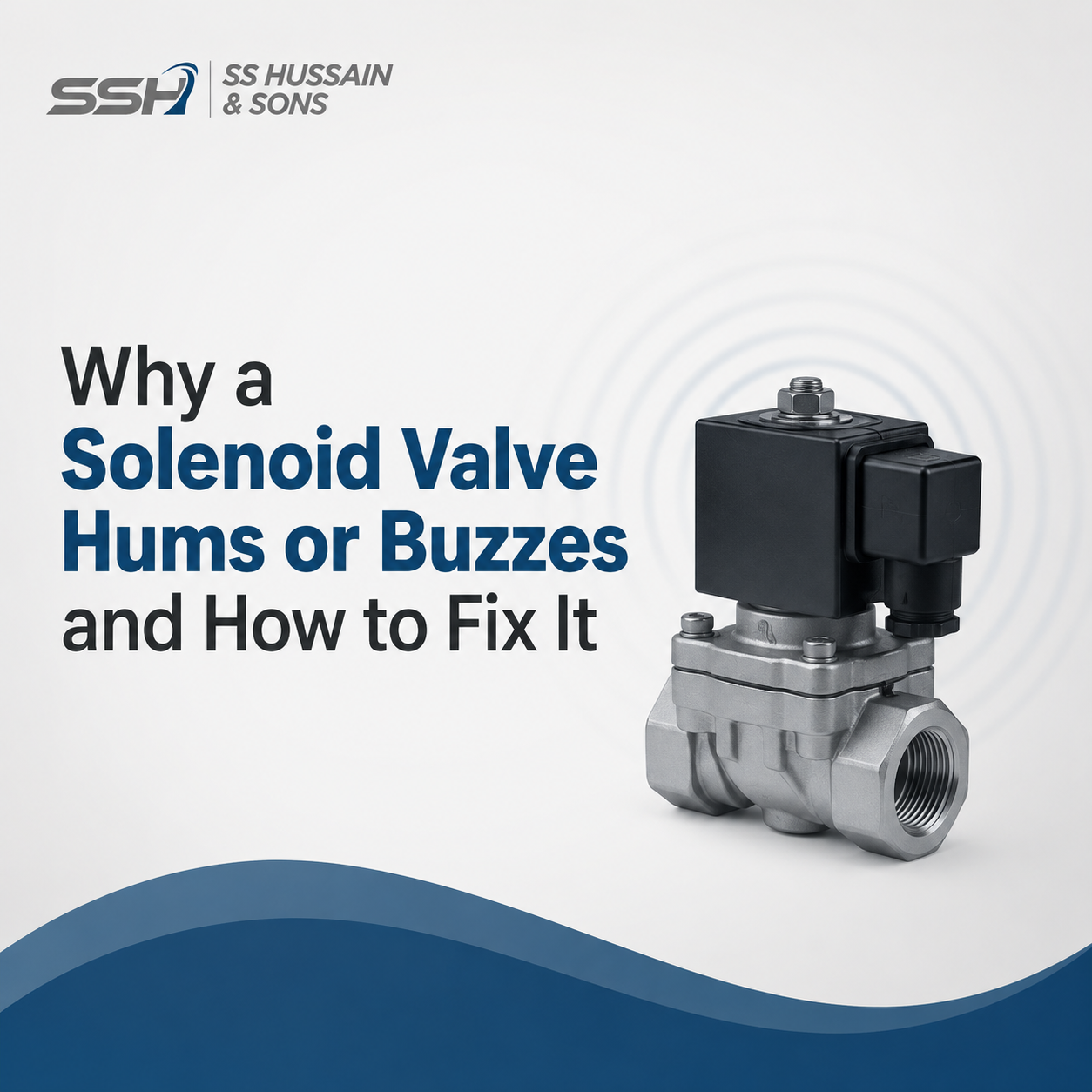
You hear a buzzing sound, glance at the solenoid valve, and think, “It still works, so it can wait.” A week later, the noise is louder. Then the valve starts sticking, the machine slows down, or everything stops at the worst possible time.
That little buzz is usually the valve asking for attention. Catch it early, and the fix is often quick. Ignore it, and a small issue can turn into an expensive repair. Here’s why a solenoid valve hums or buzzes, what causes it, and how you can fix it before it becomes a bigger problem.
Why Does a Solenoid Valve Hum or Buzz?
A solenoid valve controls the flow of air, water, oil, gas, or steam. Inside the valve is an electrical coil and a small metal plunger. When power reaches the coil, it creates a magnetic field that pulls the plunger into place, allowing the valve to open or close.
A light humming sound is normal for many AC solenoid valves because alternating current naturally creates a small vibration.
A loud buzzing sound is different. It usually means the plunger cannot stay in its correct position. Instead, it keeps moving back and forth very quickly, creating the buzzing noise.
If your solenoid valve is making a humming noise, vibrating, opening slowly, or getting hotter than normal, it is worth checking before the problem gets worse.
What Causes a Solenoid Valve to Buzz?
Several things can cause a solenoid valve buzzing noise, and the valve itself is not always to blame.
Low Voltage
Low voltage is one of the biggest reasons a solenoid valve starts buzzing.
The coil is designed to work at a specific voltage. If it receives less power than it needs, the magnetic field becomes weaker. The plunger tries to move into position but cannot stay there, so it vibrates instead.
This can happen because of loose wiring, damaged cables, overloaded circuits, poor electrical connections, or voltage drop across long cable runs.
A quick voltage check with a multimeter can often reveal the problem. Test the voltage while the valve is switched on because the reading can change under load.
Dirt Inside the Valve
It doesn’t take much dirt to cause trouble.
Tiny pieces of rust, welding debris, pipe scale, sand, or mineral deposits can stop the plunger from moving freely. Something as small as a grain of sand can be enough to keep the valve from operating smoothly.
This happens quite often after new pipelines are installed or when older pipes begin to rust inside.
Cleaning the valve usually solves the problem. If dirt keeps returning, adding a filter or strainer before the valve is a smart way to protect it.
Incorrect Pressure
Every industrial solenoid valve is designed to work within a certain pressure range.
If the pressure is too low, some valves cannot move the plunger properly, which causes chatter or buzzing. If the pressure is too high, the coil has to work harder every time the valve operates, creating extra heat and wear.
Checking the pressure takes only a few minutes and can save you from replacing a valve that isn’t actually faulty.
Heat Around the Valve
A warm coil is completely normal.
A coil that becomes too hot to touch, smells burnt, or changes colour needs attention.
As the coil gets hotter, its magnetic strength drops. The plunger can no longer stay firmly in place, and the buzzing becomes more noticeable.
The heat may come from the coil itself or from nearby equipment such as steam lines, ovens, boilers, or furnaces.
Can Incorrect Installation Cause a Solenoid Valve to Buzz?
Yes, and it is one of the easiest problems to miss.
Start by checking the flow direction. Every valve has an arrow showing the correct direction for the fluid. If the valve is installed backwards, it may still work, but it won’t work properly.
The mounting position also matters. Many manufacturers recommend installing the valve with the coil facing upward. This helps the plunger move smoothly and reduces wear over time.
Pipe alignment is another thing to check. Pipes that are forced into position can put stress on the valve body. That small amount of pressure can affect the internal parts and create vibration.
How Do You Fix a Buzzing Solenoid Valve?
Before buying a new valve, spend a few minutes checking the basics.
- Measure the supply voltage while the valve is operating.
- Tighten loose electrical terminals.
- Inspect the wiring for damage.
- Clean rust, dirt, and mineral deposits from inside the valve.
- Check the plunger and spring for wear.
- Compare the operating pressure with the valve specifications.
- Confirm the valve is installed in the correct direction.
- Replace the coil if it is burnt or damaged.
These simple checks solve many solenoid valve troubleshooting problems without replacing the complete valve.
How Can You Tell if the Coil Is Failing?
The coil usually gives warning signs before it fails completely.
| Warning Sign | What It Could Mean |
| Loud buzzing | Weak magnetic field or vibrating plunger |
| Coil becomes very hot | High resistance or overload |
| Burnt smell | Damaged coil insulation |
| Valve opens slowly | Weak magnetic pull |
| Valve works on and off | Electrical fault or failing coil |
If you notice two or three of these signs together, inspect the valve as soon as possible.
When Should You Replace the Solenoid Valve?
Cleaning and repairs solve many problems, but replacement is the better choice if the internal parts are badly worn.
Replace the valve if you notice:
- A burnt coil
- A cracked valve body
- Heavy corrosion inside the valve
- A badly worn plunger
- Constant buzzing after cleaning and voltage checks
- Internal leakage that cannot be repaired
When replacing the valve, make sure the new one matches the voltage, pressure, temperature, fluid type, and duty cycle of your application. A valve that looks similar may not perform the same way.
How Can You Prevent Solenoid Valve Buzzing?
Most buzzing problems can be avoided with simple maintenance.
- Keep the fluid clean by using a filter or strainer.
- Inspect electrical connections regularly.
- Use the correct supply voltage.
- Stay within the recommended pressure range.
- Replace worn seals before dirt reaches the valve.
- Inspect valves that operate frequently more often than those used occasionally.
Spending a few minutes on routine checks can prevent unexpected downtime and costly repairs later.
Conclusion
A humming or buzzing solenoid valve rarely starts making noise without a reason. Low voltage, dirt, incorrect pressure, heat, worn parts, or installation issues are usually behind the problem. Finding the cause early helps you avoid bigger repairs and keeps your equipment running the way it should.
Don’t Wait Until a Small Buzz Becomes a Big Repair
If your solenoid valve has started making noise, now is the best time to fix it. At SS Hussain, we supply high-quality industrial solenoid valves, replacement coils, and the right products for air, water, steam, gas, and oil applications. If you’re unsure which valve suits your equipment, our team is happy to help you choose the right solution. A quick conversation today could save you from an expensive breakdown tomorrow.
Frequently Asked Questions
Is it safe to keep using a buzzing solenoid valve?
A solenoid valve can still operate while buzzing, but it should not be ignored. The noise often means the valve is under extra stress because of low voltage, dirt, incorrect pressure, or worn parts. Fixing the issue early helps prevent unexpected failure and extends the life of the valve.
Why does my solenoid valve buzz only after it gets warm?
If the buzzing starts after the valve has been running for a while, the coil may be overheating. As the temperature rises, the magnetic field can become weaker, making it harder for the plunger to stay in position. Poor ventilation, high ambient temperatures, or an overloaded coil are common causes.
Can a buzzing solenoid valve increase electricity usage?
Yes, it can in some cases. A valve that is struggling to operate because of a weak coil or incorrect voltage may draw power inefficiently and generate extra heat. Fixing the underlying problem can improve both performance and energy efficiency.
Does the type of fluid affect solenoid valve noise?
Yes. Clean water, air, oil, steam, and other fluids behave differently inside a valve. Thick or contaminated fluids can slow down the movement of the plunger, while debris in the fluid may cause vibration or buzzing during operation.