
-
Address: Shahrah-e-Liaquat,
Serai Quarters 74000, Karachi -
Call Us: +92 319 3961178
info@sshussain.com
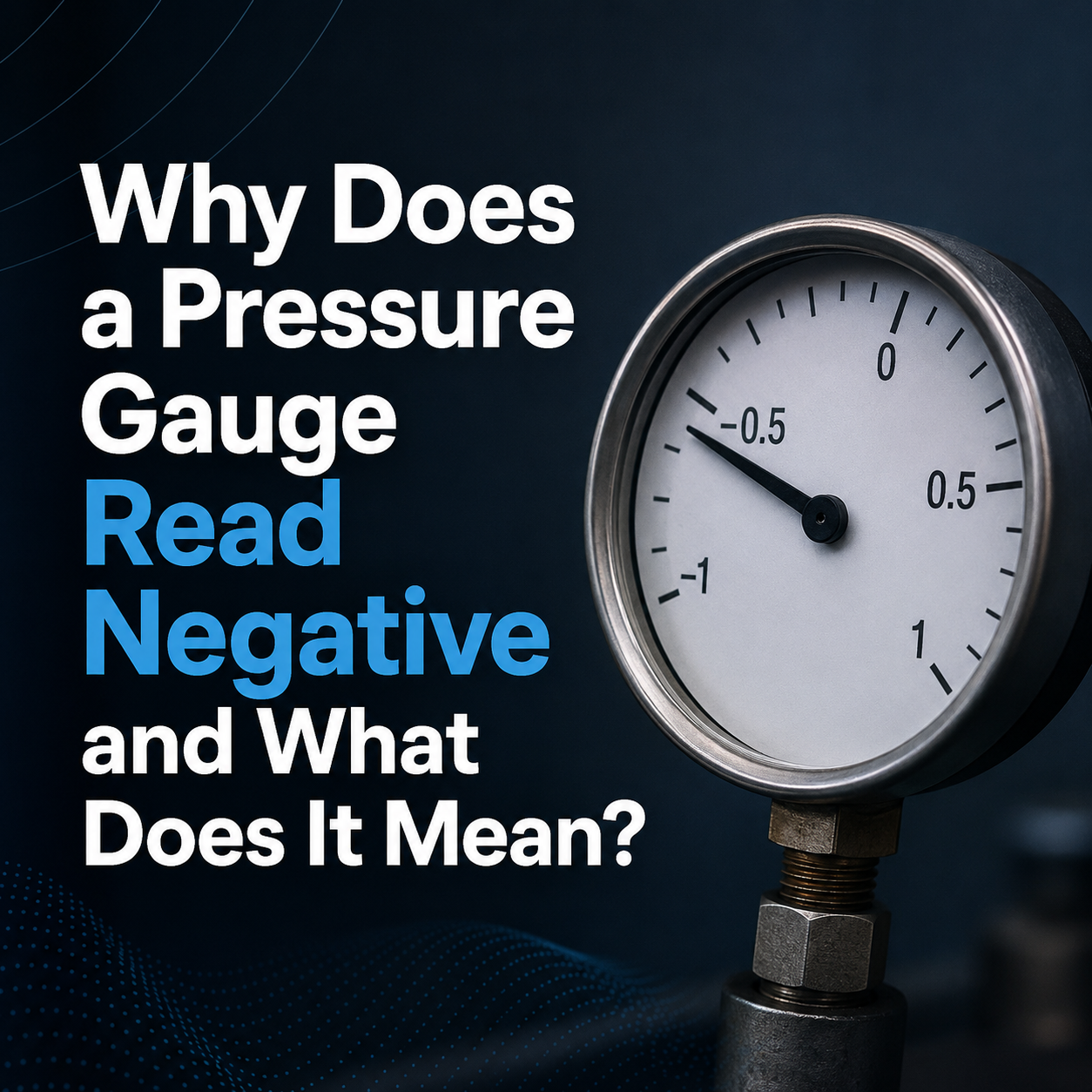
You check a pressure gauge expecting a normal reading, but the needle is sitting below zero. Your first thought is probably, “Something’s broken.” Surprisingly, that’s often not the case. A pressure gauge reading below zero can be completely normal. The real challenge is knowing when it’s part of the process and when it’s warning you that something needs attention. Once you know what that little needle is trying to tell you, troubleshooting becomes much simpler.
How Does a Pressure Gauge Read Negative?
A standard pressure gauge compares the pressure inside your equipment with the atmospheric pressure outside. Atmospheric pressure is treated as zero on the gauge.
When the pressure inside a pipe, tank, or machine drops below the surrounding air pressure, the needle moves below zero. This is called negative gauge pressure or vacuum pressure.
A straw is a great example. When you drink through it, you reduce the air pressure inside the straw. The higher air pressure outside pushes the drink upward. Vacuum pumps, suction lines, and many industrial machines work in exactly the same way.
So, if your pressure gauge reads negative, it usually means a vacuum has been created inside the equipment.
What Does a Negative Pressure Gauge Reading Mean?
A negative pressure gauge reading means the pressure inside the equipment is lower than atmospheric pressure.
If the gauge shows -0.5 bar, the pressure inside is half a bar lower than the air around it.
People often confuse this with absolute pressure, but they’re different.
| Pressure Type | Reference Point | Can It Show Negative Values? |
| Gauge Pressure | Atmospheric pressure | Yes |
| Absolute Pressure | Perfect vacuum | No |
This is why a standard pressure gauge can read below zero, while absolute pressure cannot.
Where Is Negative Pressure Used?
A negative reading isn’t unusual at all. Many industries depend on vacuum pressure every day to keep their processes running smoothly.
You’ll commonly find vacuum pressure gauges in:
- Vacuum pumps
- Food packaging equipment
- HVAC and ventilation systems
- Pharmaceutical plants
- Chemical processing
- Medical equipment
- Laboratories
- Printing and packaging machines
Think about a packet of coffee or chips. Before it’s sealed, the air is removed from the package. As the air leaves, the pressure inside drops below atmospheric pressure, so the gauge moves into the negative range.
Hospitals use the same principle in negative pressure isolation rooms, where controlled airflow helps prevent airborne particles from spreading to other areas.
Why Does a Pressure Gauge Suddenly Read Negative?
If your equipment usually operates under positive pressure and suddenly starts showing a negative reading, something in the process has changed.
One of the first things to check is the filter. As dirt builds up, the pump has to pull harder to move the same amount of liquid or gas. That extra effort creates more vacuum, causing the gauge to move further below zero.
A valve that’s only partly open can create the same effect by restricting flow. A blocked suction pipe, a bent hose, or a low liquid level in the supply tank can also increase negative pressure.
Air leaks deserve attention too. Vacuum systems behave differently from pressure systems. Instead of letting pressure escape, they allow outside air to enter. A loose fitting, damaged seal, or cracked hose can change the vacuum level and affect the gauge reading.
The biggest clue is a sudden change. If the gauge normally sits at -0.2 bar and starts reading -0.8 bar, the process deserves a closer look.
Why Does the Suction Side of a Pump Show Negative Pressure?
This is one of the questions people ask most when they start working with pumps.
Most pumps have one gauge on the suction side and another on the discharge side.
The suction pressure gauge often shows a negative reading because the pump is pulling liquid toward itself. That lowers the pressure before the pump.
After the liquid passes through the pump, it’s pushed into the pipeline. That’s why the discharge gauge normally shows positive pressure.
Seeing one gauge below zero and the other above zero is completely normal.
Can Weather and Altitude Affect Pressure Gauge Readings?
Yes, although the change is usually small.
A pressure gauge uses atmospheric pressure as its reference point. Since atmospheric pressure changes with weather and altitude, the reading can change slightly too.
If you move the same equipment from sea level to a much higher location, the gauge may not show exactly the same reading.
For everyday industrial work, this difference is usually too small to cause concern. During pressure gauge calibration or high-accuracy testing, it becomes much more noticeable.
Can a Pressure Gauge Give the Wrong Reading?
It certainly can.
Like any measuring instrument, an industrial pressure gauge wears over time.
Constant vibration, pressure spikes, moisture, dirt inside the pressure connection, or worn internal parts can all affect accuracy.
A quick check is to safely remove the gauge from the equipment. The needle should return to zero under normal atmospheric pressure.
If it stays below zero or doesn’t move smoothly, the gauge may need calibration or replacement.
Comparing it with another calibrated gauge is one of the quickest ways to confirm whether the reading is correct.
How Do You Troubleshoot a Pressure Gauge Showing Negative Pressure?
Before replacing the gauge, spend a few minutes checking the rest of the equipment.
- Compare the reading with the normal operating value.
- Check the filter for dirt or blockage.
- Make sure all valves are fully open.
- Inspect hoses and suction pipes for restrictions.
- Look for loose fittings or leaking seals.
- Compare the reading with another calibrated gauge.
- Check whether the equipment is designed to operate under vacuum.
Many problems are found during these simple checks, which saves both time and unnecessary repair costs.
What Mistakes Should You Avoid?
Negative pressure readings are often misunderstood, and that can lead to unnecessary repairs.
Some common mistakes include:
- Assuming every negative reading means the gauge is faulty.
- Replacing the gauge before checking the filter or suction line.
- Ignoring slow changes in pressure over time.
- Forgetting that the suction side of a pump normally operates below atmospheric pressure.
- Comparing readings from gauges installed at different locations.
Recording normal pressure readings during regular operation makes future troubleshooting much easier.
How Can You Keep Pressure Gauges Accurate?
Pressure gauges don’t need much attention, but a little maintenance goes a long way.
Inspect them during routine maintenance, clean blocked pressure ports, check fittings for leaks, and follow a regular pressure gauge calibration schedule.
If the needle starts sticking, reacts slowly, or gives readings that don’t match the process, inspect the gauge before replacing other equipment. Sometimes the smallest component is the one causing the biggest headache.
Conclusion
A pressure gauge reading below zero isn’t automatically a sign of trouble. In many cases, it simply means your equipment is operating under vacuum, exactly as it was designed to. What matters is knowing what the normal reading should be. If the needle suddenly moves much lower than usual, becomes unstable, or doesn’t return to zero during testing, it’s time to inspect the process before replacing parts.
Find the Right Pressure Gauge for the Job
A pressure gauge is only useful when it’s the right type, the right range, and the right fit for your application. If you’re choosing a new pressure gauge, vacuum gauge, or another pressure measurement instrument, we at SS Hussain is ready to help. We’ll help you select the right solution for your process, so you get accurate readings, fewer maintenance issues, and confidence that your equipment is performing the way it should. Contact us today and let’s find the right gauge for your application.
Frequently Asked Questions
Can a pressure gauge read negative without being faulty?
Yes. A pressure gauge can read negative when the pressure inside the equipment is lower than atmospheric pressure. This is common in vacuum pumps, suction lines, HVAC systems, and other applications designed to operate under vacuum. A negative reading only becomes a concern if it is unexpected or changes suddenly.
Why is my pressure gauge below zero when the equipment is off?
A pressure gauge should normally return to zero when the equipment is off and exposed to atmospheric pressure. If it stays below zero, the gauge may need calibration, the pointer could be damaged, or pressure may still be trapped inside the system.
Is negative pressure the same as vacuum pressure?
Negative pressure and vacuum pressure are closely related. A negative pressure gauge reading means the pressure is lower than atmospheric pressure, which indicates a vacuum has been created inside the equipment. The deeper the vacuum, the lower the gauge reading.