Quick Answer If your level or flow instrument gives a wrong reading, sets off a false alarm, or looks damaged, check it. This does not always mean it is broken. Tannery wastewater has chromium, sulfide, chloride, and fat in it. This mix rusts metal parts and coats the sensor faster than normal wastewater does. Check

-
Address: Shahrah-e-Liaquat,
Serai Quarters 74000, Karachi -
Call Us: +92 319 3961178
Email Us: info@sshussain.com


Industrial Instrumentation Checklist for New Textile Factories in Faisalabad
Quick Answer Faisalabad handles the full textile value chain in one city, from ginning and spinning to weaving, dyeing, and finishing. That means a new mill here needs all six instrument categories working together from day one: pressure, temperature, humidity, flow, level, and pneumatic air systems. Cotton dust is a bigger day to day

sshussainadmin
sshussainadmin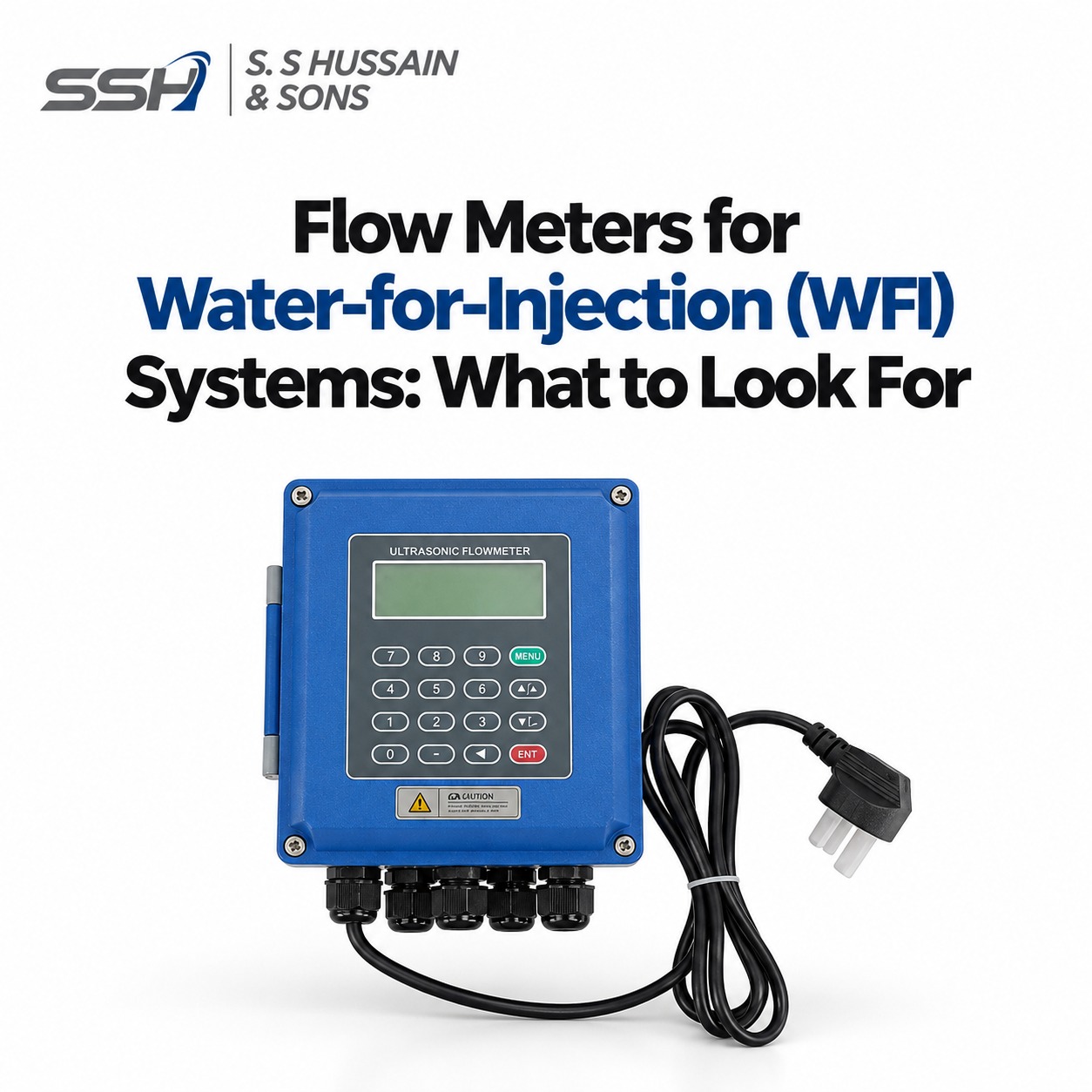
Flow Meters for Water-for-Injection (WFI) Systems: What to Look For
Quick Answer A flow meter for a Water-for-Injection (WFI) system must work on very low-conductivity water and survive continuous, hot loop circulation. The best option never touches the fluid at all. Clamp-on ultrasonic meters meet all three requirements. Oval gear meters, diesel-style meters, and standard vortex meters do not, and should be avoided.
sshussainadmin
sshussainadmin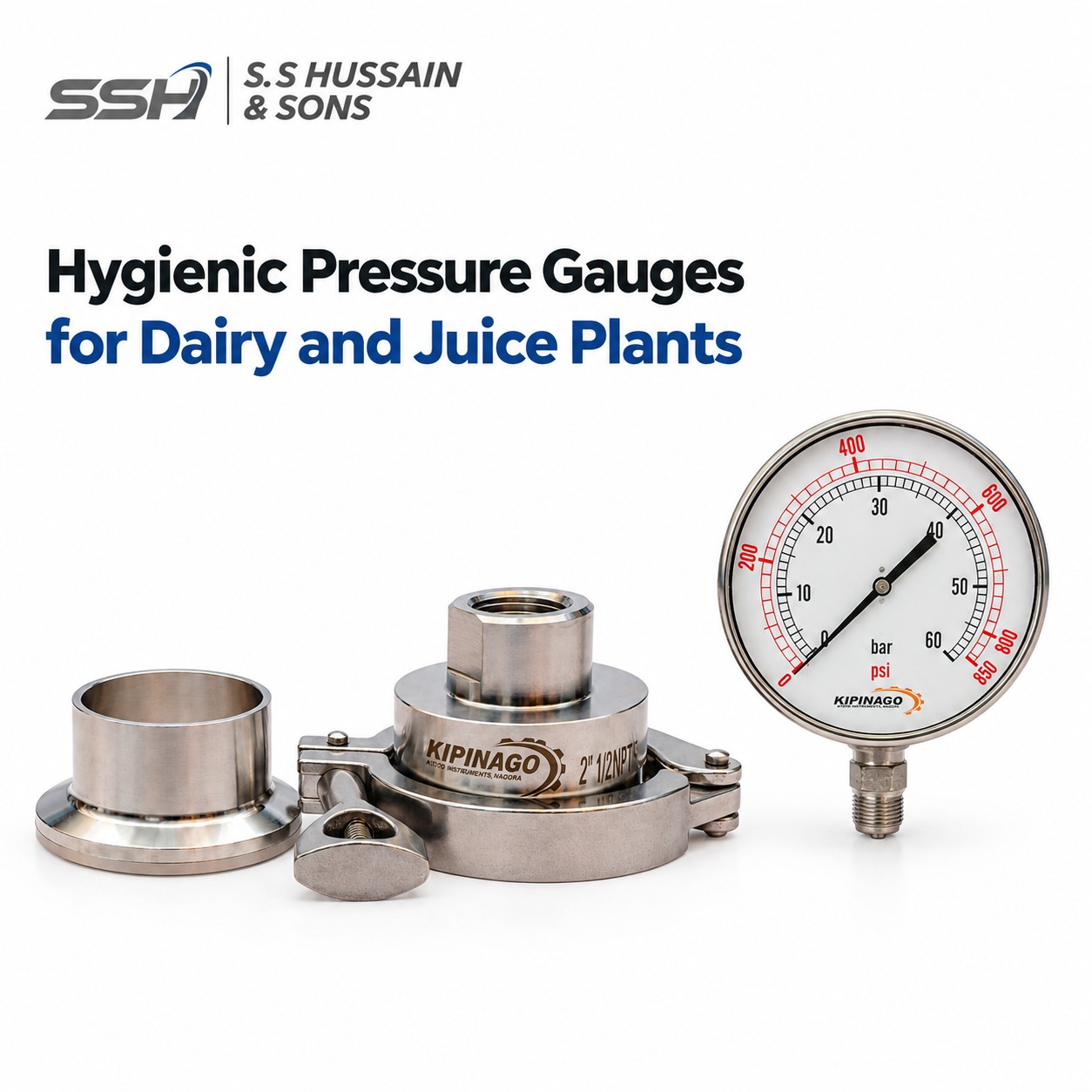
Hygienic Pressure Gauges for Dairy and Juice Plants
Quick Answer A hygienic pressure gauge for a dairy or juice plant needs a welded 316L stainless steel diaphragm, a tri-clamp connection on the product side, and no threads touching the product. Look for 3-A Sanitary Standard or ASME BPE compliance. A regular stainless steel gauge without these features does not meet hygienic requirements,
sshussainadmin
sshussainadmin
Pneumatic Cylinder Requirements for Textile Machinery
Quick Answer For textile machinery, a pneumatic cylinder needs to have the right bore size and stroke, as well as protection from lint, dust, humidity, and heat. Lint is the main cause of early cylinder failures in textile mills, and if you choose the right seal material and rod type for your mill’s working conditions,
sshussainadmin
sshussainadmin
Kipinago vs Local Market Pressure Gauges: What’s the Real Difference
Quick Answer Kipinago pressure gauges are more accurate, more durable and better supported than other local market gauges. Made up of stainless steel, these are accurate to 0.5 % over their digital range. These are not the typical local gauges but have the support of the manufacturer SS Hussain & Sons. This makes them
sshussainadmin
sshussainadmin
A Complete Guide to Pressure Transmitter Installation, Upkeep, and Troubleshooting
Quick Answer A pressure transmitter needs correct mounting, clean wiring, and regular calibration to work well. Most failures come from poor installation, moisture, or skipped maintenance. Catching small issues early, like drift or loose fittings, stops most bigger breakdowns before they start. Intro Pressure transmitters are used to detect pressure in pipe or
sshussainadmin
sshussainadmin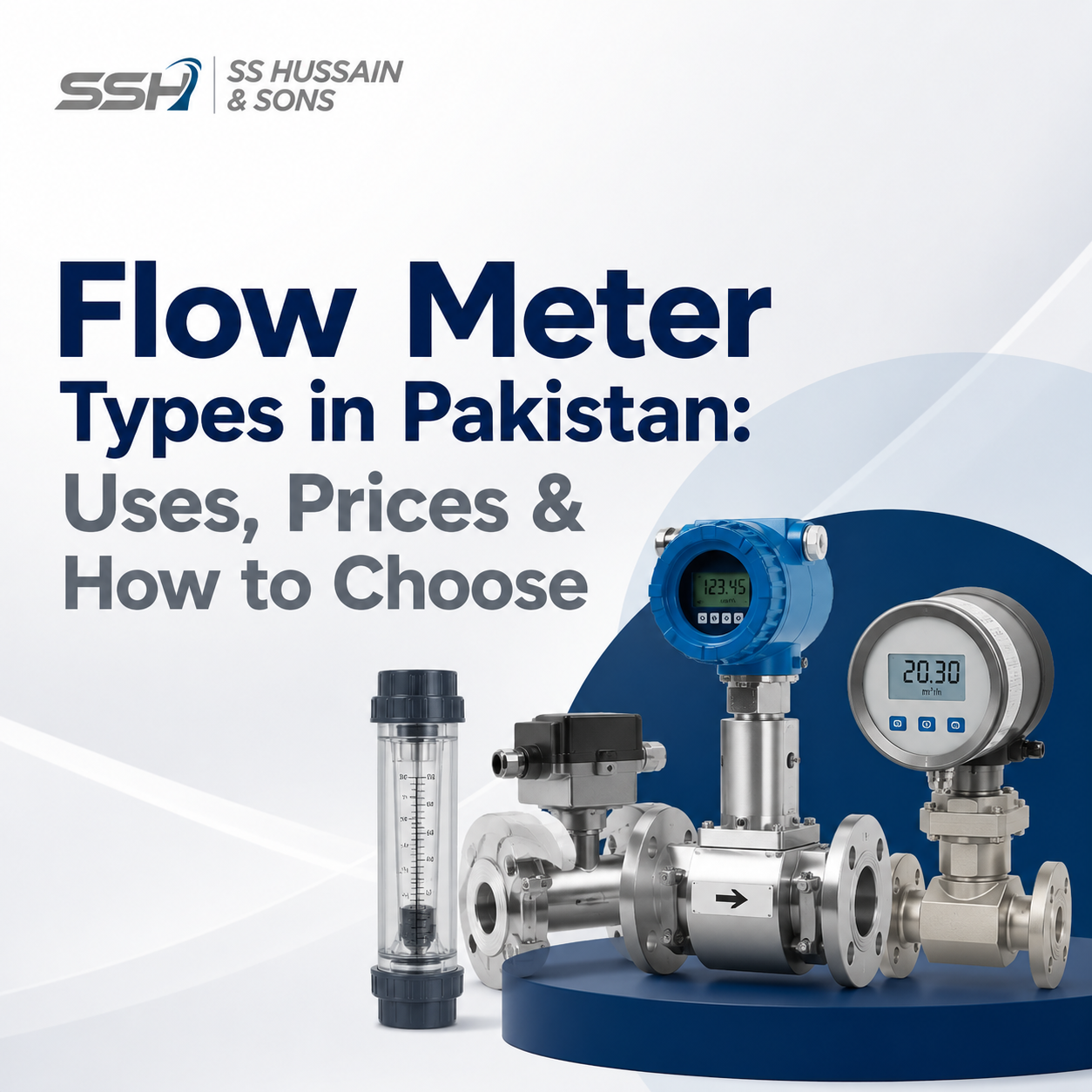
Flow Meter Types in Pakistan: Uses, Prices & How to Choose
Quick Answer The main flow meter types are diesel meters, turbine meters, electromagnetic meters, oval gear meters, vortex meters, and ultrasonic meters. Each type is made for a different fluid and a different type of work. Diesel and oval gear meters are commonly used for fuel and oil, while electromagnetic and ultrasonic meters are used
sshussainadmin
sshussainadmin
How to Reduce Humidity in a Room (And How to Check It First)
Quick Answer Normal room humidity is 30% to 50%. If your room has high humidity, open the windows, use an exhaust fan, or run a dehumidifier. You can also use moisture absorbers in small spaces. But first, check the humidity level with a hygrometer. It is better to know the actual number than to
sshussainadmin
sshussainadmin
Hygrometers in Pakistan: Which One Should You Buy?
Quick Answer SS Hussain & Sons offers hygrometers ranging from simple digital models to advanced WiFi-enabled ones. A simple digital model is enough for most homes. If you want to check humidity while you’re not home, go for a WiFi model. If you don’t want to deal with batteries, an analog one works fine too.
sshussainadmin
sshussainadmin
What Is a Thermowell Used For? A Simple Guide
Quick Answer A thermowell is a hollow metal tube that shields a temperature sensor from a process fluid. It sits inside a pipe or tank so the sensor never touches the liquid, gas, or steam directly. This protects the sensor, makes it easy to replace, and keeps temperature readings accurate for years. What
sshussainadmin
sshussainadmin
How to Choose the Right FRL Unit for Your Pneumatic System
Quick Answer To choose the right FRL unit, match it to your machine’s peak airflow, working pressure, and pipe size. Check if your equipment needs lubrication before adding a lubricator. Add a water separator if moisture is a problem. Install the unit close to the machine for the best results. How to Choose